
Enhancing the charging experience for next-generation plug-in electric vehicles
Ultrafast charging tech lets plug-in electric vehicles hit 80% in 15 mins—see what’s next for EVs as China leads in 1,000 kW innovation. Discover how to stay ahead with forward-looking forecast data, as we gear up towards the launch of the S&P Global Mobility E-Mobility Technology Module in Q3 for AutoTechInsight customers.
- The nuanced path to ultrafast charging for plug-in electric vehicles
- Larger batteries expand range but slow momentum for ultra-fast charging
- Solid-sate batteries remain niche
- Battery swapping to go global or remain a Chinese-led technology?
- Wireless charging: High hopes, low momentum
- Charging innovation will define the future EV experience
As the automotive industry shifts toward electrification, the need for faster, more convenient electric vehicle charging is clear. Consumers are demanding shorter wait times and a more predictable public charging experience. Automakers are acutely aware of this issue as they develop and market their vehicles.
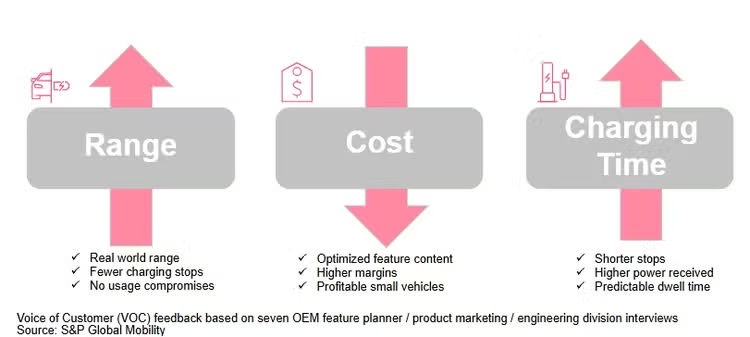
The latest research from S&P Global Mobility’s E-Mobility Technology Module indicates that charging is one of the three main barriers to broader EV adoption, along with range and cost. However, new EV charging technologies are making it easier and quicker to power up.
While adoption varies across vehicle types and markets, these technologies—from ultrafast charging to battery swapping—are helping to address key barriers and reshaping how consumers interact with EVs.
E-Mobility Technology Module
Development priorities for Original Equipment Manufacturers:
The nuanced path to ultrafast charging for plug-in electric vehicles
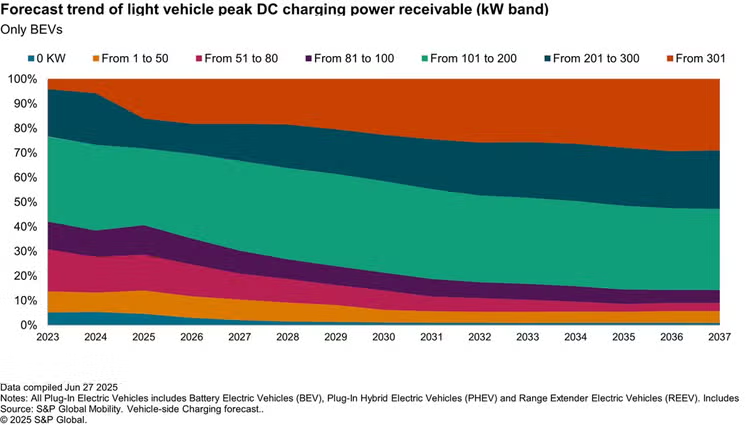
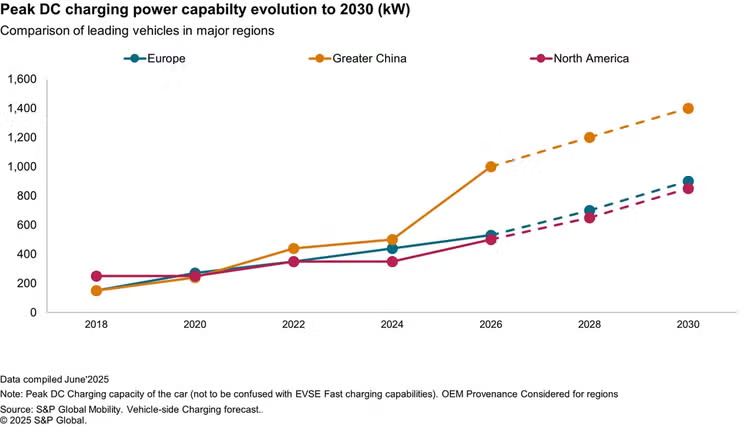
Recent breakthroughs in EV charging technology have led to the development of ultrafast charging systems that can deliver power levels of 350 kW and above, allowing vehicles to reach 80% charge in just 15 to 20 minutes.
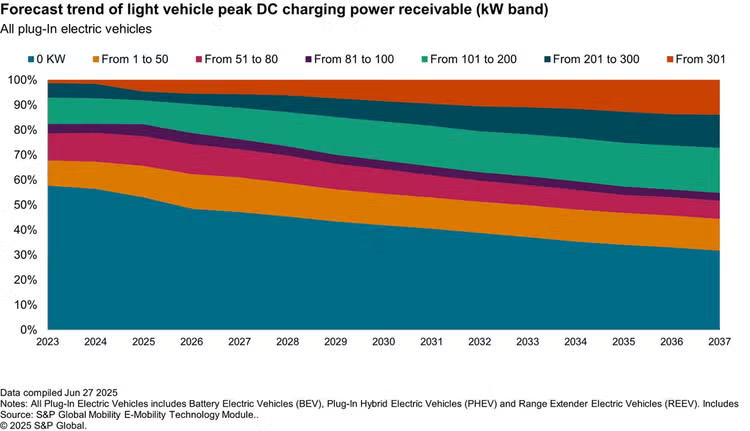
Chinese automakers like Dongfeng and BYD, along with battery supplier CATL, have already showcased charging technologies that deliver up to 1,000 kW. However, most plug-in electric vehicles still can’t handle this power surge. Plug-in electric vehicles include battery-electric vehicles (BEVs), plug-in hybrids (PHEVs) and range-extender EVs (REEVs).
Larger batteries expand range but slow momentum for ultra-fast charging
Beyond power levels alone, battery size and charging behavior are important in shaping the EV charging experience.
Advancements in battery technology enable higher power charging and more consistent performance, largely determined by the battery's charging rate, or “C-rate.” A key goal is improving linearity—how steadily a battery charges over time, rather than starting fast and slowing down as it fills.
While higher charging power leads to faster charging times, the growing trend toward larger batteries for extended range can distort charging data, as larger batteries often charge less consistently.
We expect battery capacities to continue increasing, particularly for PHEVs and REEVs. These larger batteries will boost electric range and expand fast-charging capability across more vehicles. Still, we project only a slight rise in average DC charging power for PHEVs and REEVs, suggesting a shift in priorities away from ultra-fast charging toward better range and steadier charging performance.
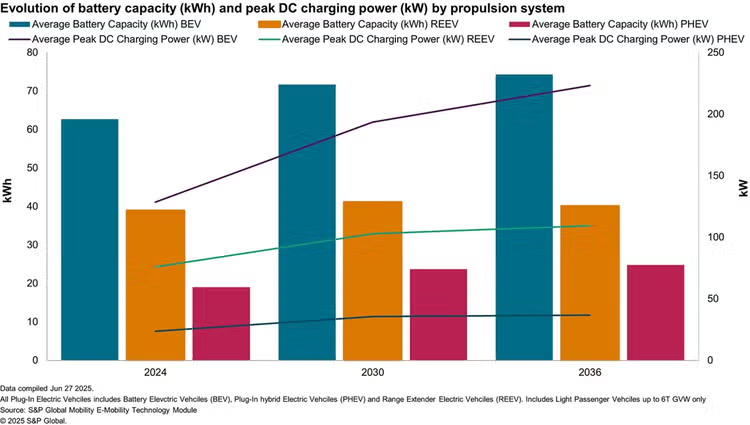
Despite some challenges, we expect DC fast charging to become a common feature in PHEVs. Meanwhile, range extender technology—led by Chinese automakers like Li Auto and Seres—will enable PHEVs to run on electric power first and switch to a gasoline engine when needed.
Our research indicates growing global interest in range extender technology, likely fueled by relaxed regulations that recognize vehicles for their ability to operate with zero tailpipe emissions—that is, producing no pollution while running on electric power—even if they sometimes use an engine that emits pollutants. This approach is similar to the new energy vehicle (NEV) regulations in Greater China.
Solid-state batteries remain niche
While most efforts focus on enhancing lithium-ion batteries, solid-state battery technology remains a long-term solution, aiming to support higher C-rates and safely handle more power without compromising longevity. However, there is still room for improvement.
When CATL launched an advanced LFP battery in April 2024 with 4C charging and a 1,000 km range, the industry largely overlooked the implications for solid-state technology. As consumers and investors await breakthroughs in solid-state batteries, developments in existing technologies may reduce solid-state relevance.
Challenges such as material handling and lithium-sulfide sourcing complicate the mass production of solid-state batteries and keep prices high. As a result, OEMs may focus on improving conventional lithium-ion technologies to meet mainstream consumer demands. Our data suggests that global annual solid-state battery sales will not exceed 1 million units until 2036—a 2.8% BEV penetration rate—primarily in Greater China and the US.
Battery swapping to go global or remain a Chinese-led technology?
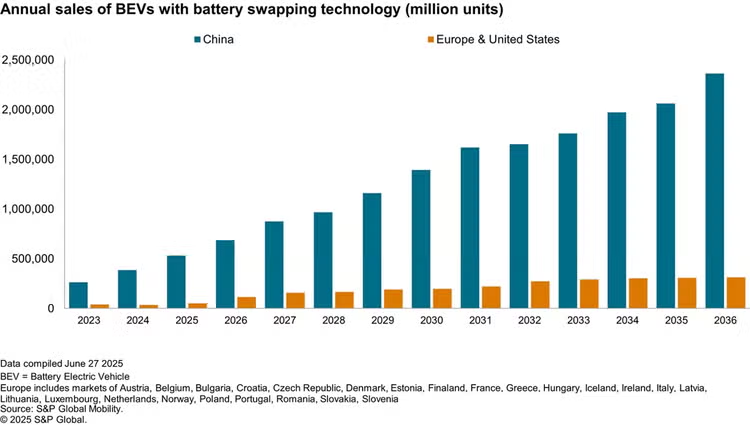
While solid-state batteries remain a longer-term prospect, battery swapping is gaining traction as a more immediate solution, particularly in China. Recent enthusiasm for standardizing battery swapping in China appears justified, especially as early adopters NIO and battery giant CATL develop different approaches to the technology.
Battery swapping allows EVs to quickly exchange a depleted battery for a fully charged one at dedicated stations, eliminating the wait time for charging. The Choco-Swap technical standard, announced in March 2025, signals growing adoption among domestic and joint venture vehicles in China toward supporting this faster, more flexible charging alternative.
Data from the E-Mobility Technology Module shows that by 2030, 74% of battery swapping applications will target vehicles with battery capacities above 60 kWh, primarily longer-range, larger segment models suited for highway use. However, uncertainties persist regarding the technology's viability beyond China, as we project annual sales of battery-swapping capable vehicles in major European markets and the US to exceed only 200,000 units by 2031.
Wireless charging: High hopes, low momentum
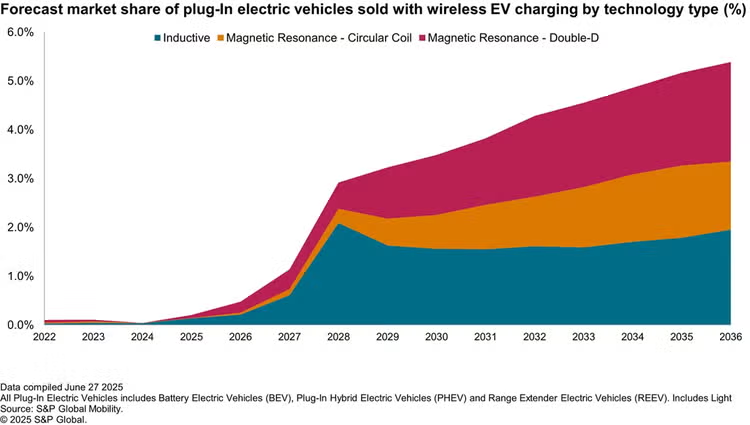
Another promising technology—wireless charging—offers long-term potential but is falling behind, despite advantages like standardization, interoperability, tier 1 licensing, and increased convenience.
Advanced technological solutions like wireless charging often struggle due to delayed market entry. We anticipate the adoption of wireless charging only after a major 2028 platform launch using induction-based technology.
Charging innovation will define the future EV experience
The future of plug-in electric vehicles’ charging is promising, driven by developments in the electric vehicle industry that provide faster, more efficient and more convenient solutions. These innovations will likely enhance EV adoption and support a sustainable, electrified future.
Continued innovation and a well-supported infrastructure rollout will be critical to delivering on the full promise of electric mobility.
Get ready for the E-Mobility technology module: Coming in Q3
Launching soon, the E-Mobility Technology Module will deliver forward-looking forecasts, supplier insights, and trend analysis—exclusively through AutoTechInsight.
Unlock next-level insight into plug-in electric vehicle innovation. Explore AutoTechInsight today to subscribe and be among the first to access this powerful forecasting tool.