
Three leading car manufacturers
capture nearly half the market

The US auto market remains heavily concentrated among just a few leading car manufacturers. Understand some of the key strategies driving their success.
- For leading car manufacturers, market share growth possible without new models
- Alternative powertrains and brand loyalty are steady keys to success
Since 2020, 34 automakers have launched at least one new vehicle in the US market. This activity might suggest that consumers now have a broad set of products to choose from. But in reality, the market remains heavily concentrated among just a few manufacturers.
S&P Global Mobility new vehicle registration data indicate that three leading car manufacturers – General Motors, Toyota Motor Corp., and Hyundai Motor Corp. – have increasingly dominated the US market and now account for 45% of new vehicle retail registrations (see Chart 1).
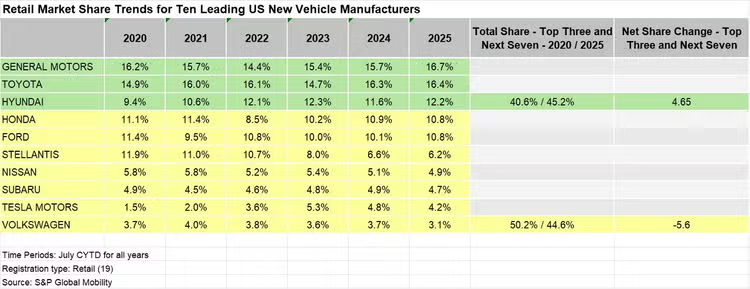
As Chart 1 indicates, these three leaders not only account for almost half of all new vehicle retail registrations, but their combined market share has climbed 4.7 percentage points since 2020. Hyundai has driven this increase, providing 2.8 percentage points of share gain all by itself.
Chart 1 also shows an interesting development – the next seven leading car manufacturers, numbers 4 through 10, used to out-perform the top three, with a combined 2020 market share of 50.2%. But their aggregated performance has slipped to just 44.6% of the market this year.
Six of these second-tier manufacturers ceded share consistently from 2020 to 2025; the exception is Tesla, whose share has jumped 2.6 percentage points despite recent challenges.
For leading car manufacturers, market share growth possible without new models
A closer look at the three leaders shows that all their brands except one have enjoyed share improvements, and that offering more models is not necessary for gaining ground (see Chart 2):
- Three of four General Motors brands have gained share, with Chevrolet the lone exception (ceding just .1 PP of share).
- GMC is the GM winner, with a .3 PP gain, benefiting in part from an increase in model count to 12.
- Buick, with a complete transformation of its portfolio from sedans to utilities, improved by .2 pp despite a reduction in model count.
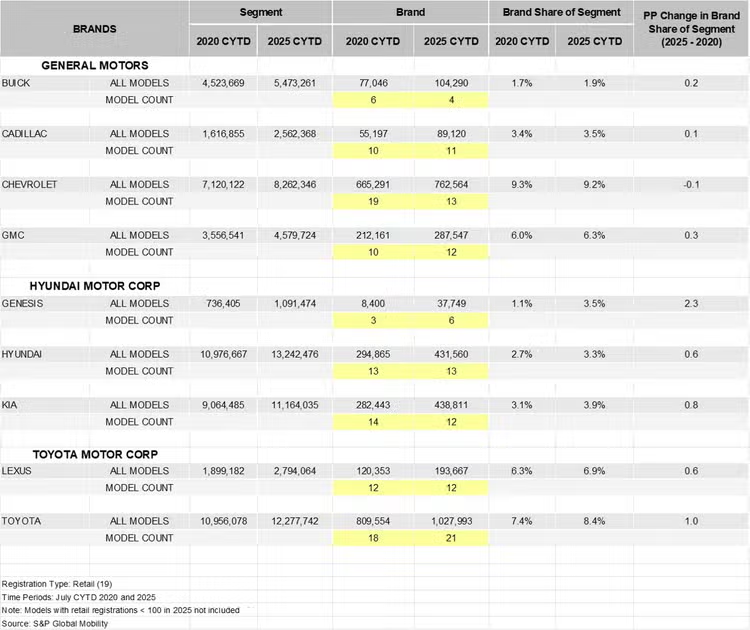
All three brands at Hyundai Motor Corp. enjoyed share increases, with Genesis’s share tripling to 3.5% on the tail winds of six models versus just three (all sedans) five years ago. Note that Kia’s share increased despite a lower model count.
Toyota’s brand gained a point in market share, thanks in part to an increase in its mainstream-leading portfolio to 21 models. Lexus’s share increased while its model count remained steady.
Alternative powertrains and brand loyalty are steady keys to success
These three leading car manufacturers achieved their gains through a combination of launching alternative powertrain vehicles and maintaining superior brand loyalty, manufacturer loyalty, and net conquesting.
All three manufacturers also benefited from an introduction of incremental electric vehicles (Chart 3).
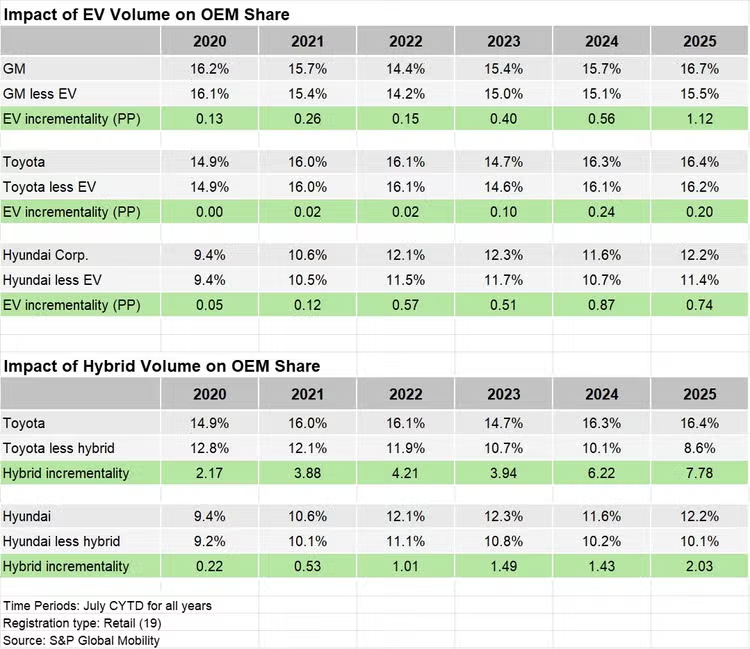
General Motors, an industry leader in the EV space, has gained 1.12 PP of market share in the first seven months of 2025 by offering EVs across all four brands, almost ten times the OEM’s EV share compared to 2020. Toyota and Hyundai also benefited from introducing EVs, though to a lesser extent than GM.
Toyota has reaped major rewards from its robust presence in the hybrid space. Building on the exceptional historical success of the iconic Prius, Toyota now offers its hybrid propulsion system across most of its models, and it owes almost half of its 16.4% retail market share thus far in 2025 to hybrid registrations.
Hyundai has also benefited from hybrid models, with its 2025 share lift from hybrids almost a multiple of ten compared to five years ago. GM currently only offers hybrid propulsion system on the Corvette, so the company has not experienced any significant lift from this powertrain.
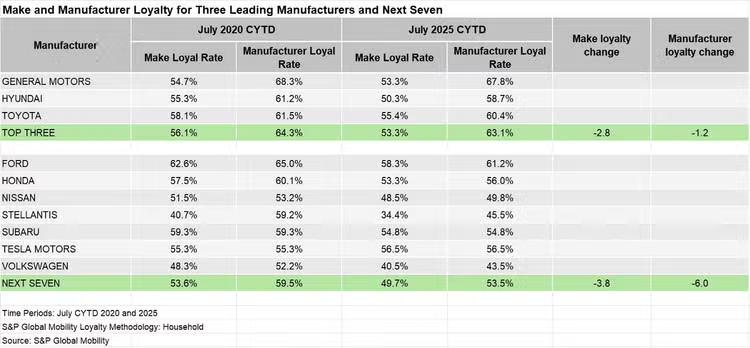
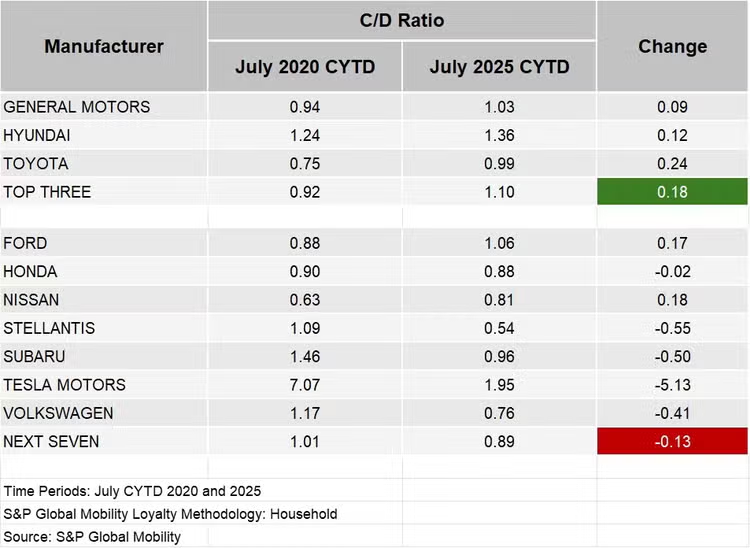
The three leading car manufacturers also have done a superior job of retaining existing owners. As shown on Chart 4 below, both make and manufacturer loyalties declined less for these companies than they did for the “Next Seven” manufacturers.
Manufacturer loyalty declined at the “Next Seven” five times as much as it did for the leaders, while brand loyalty dropped one percentage point more at the “Next Seven” than for the leaders.
(Note that all manufacturers experienced declines in this metric from 2020 to 2025 as post-pandemic loyalty rates industry-wide have failed to return to their pre-pandemic and early-pandemic levels.)
Stay ahead of shifting loyalty trends
S&P Global Mobility’s Automotive Customer Loyalty and Conquest analytics delivers more than raw numbers. It reveals the story behind owner loyalty, defections, and market opportunities.
Track purchase patterns over the past decade, uncover the drivers of brand switching, and segment customers with precision. With advanced analytics, segmentation and user-friendly dashboards, you can strengthen retention strategies and outpace competitors.
Get a preview by downloading our Loyalty Data Sample today and make informed decisions for long-term growth.