

The global light vehicles powertrain outlook for 2026 shows uneven electrification, rising hybrid adoption, regional divergence, and evolving OEM strategies worldwide.
2025–2026: The global powertrain picture
When we compare 2026 with 2025 across regions, electrification continues to rise but at a moderated, more realistic pace. Mature markets are seeing BEV growth cool after periods of rapid growth while full and mild hybrids expand share, providing cost‑effective compliance and consumer‑friendly range security.
Conventional powertrains continue to shrink in share, yet they remain part of the landscape, especially in developing markets where cost and infrastructure constraints remain significant. The overall picture is one of gradual, steady electrification, not the dramatic pivot once anticipated a few years ago.
Figures 1a, 1b, 1c. Short‑term global electrification outlook (2025–2027)
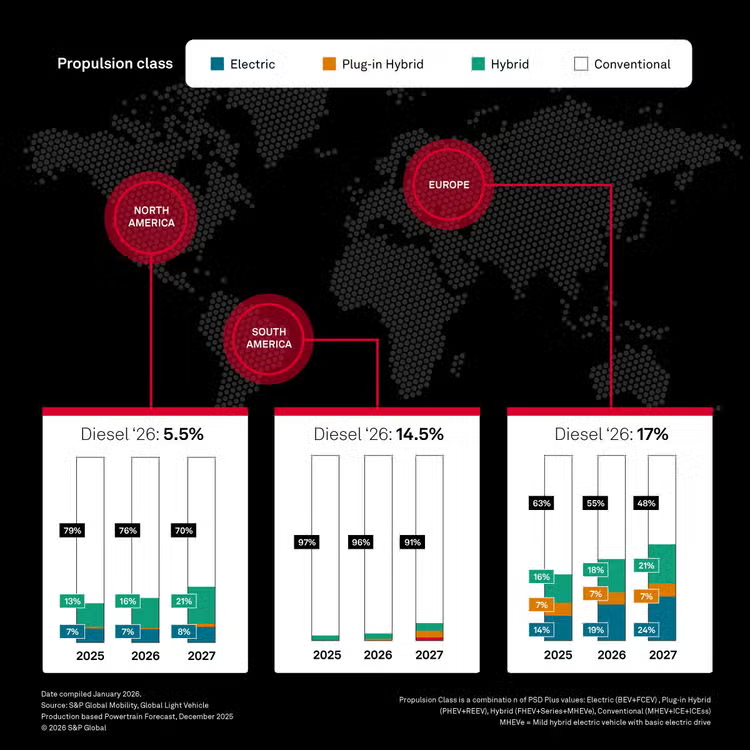
Figure 1a
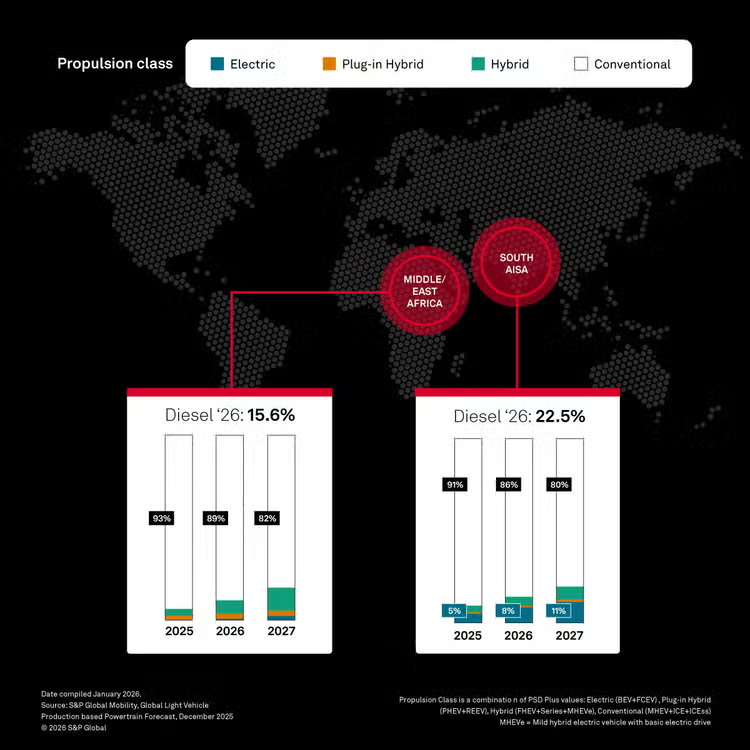
Figure 1b
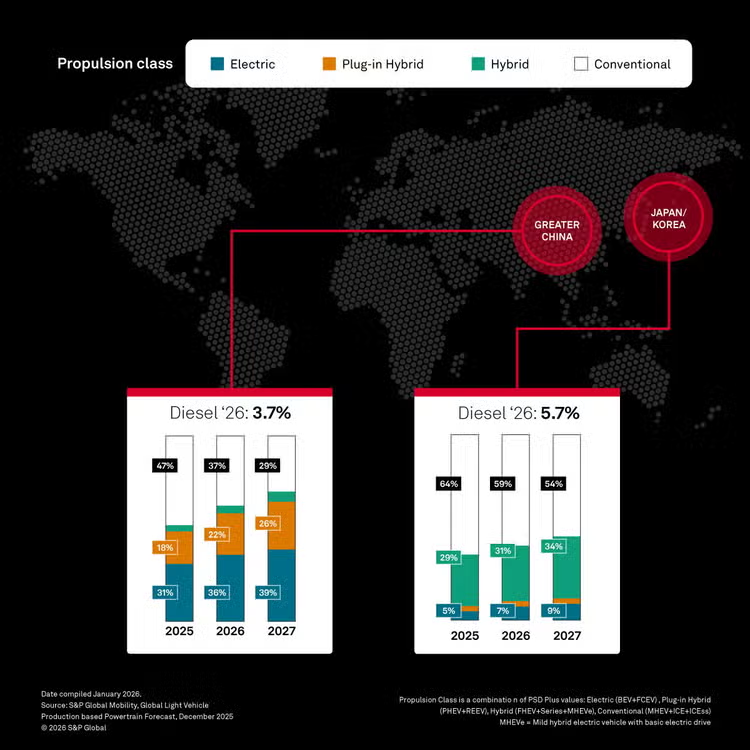
Figure 1c
Data compiled January 2026.
Source: S&P Global Mobility, Global Light Vehicle Production based Powertrain Forecast, December 2025
© 2026 S&P Global
Regional electrification outlook: Divergence instead of convergence
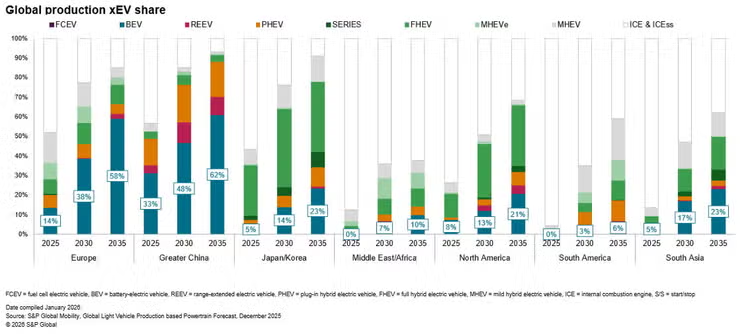
Figure 2. Global electrification projections by vehicle production region
Specific market frameworks and associated product strategy will lead to a polarized worldwide industry:
Europe BEV forecast evolution over the last year
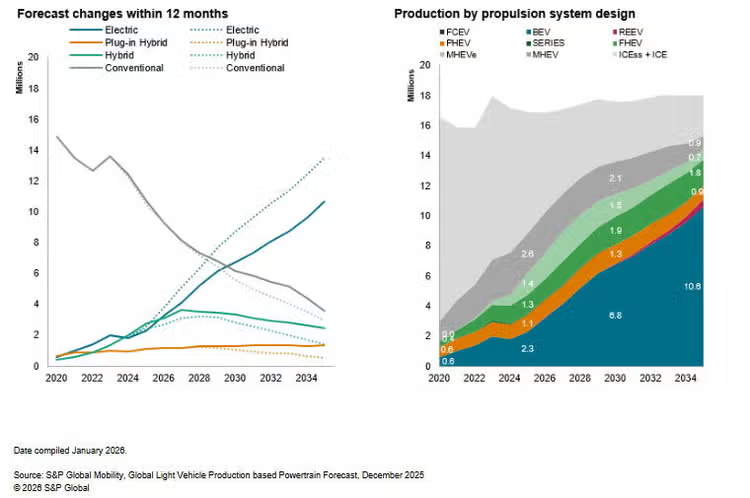
Europe remains among the most electrified regions, with BEV share moving from 14% in 2025 to 19% in 2026 and an anticipated 24% in 2027 (as pictured in figure 1a). Still, affordability constraints, tariff/trade uncertainty, and policy adjustments have tempered longer‑term BEV trajectories versus the prior outlook.
Regulatory flexibilities for 2025–2027 keep Europe on track for near‑term CO₂ targets, allowing a blend of BEV, PHEV/REEV, and advanced hybrids to carry compliance and avoid financial penalties.
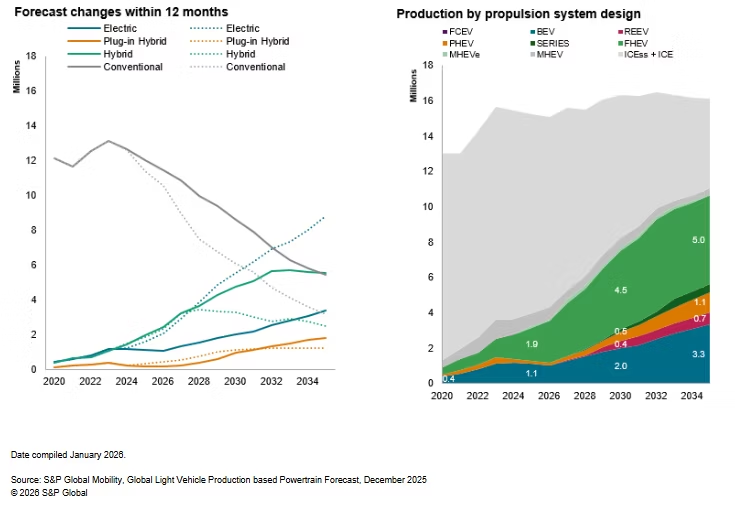
North American BEV forecast evolution over the last year
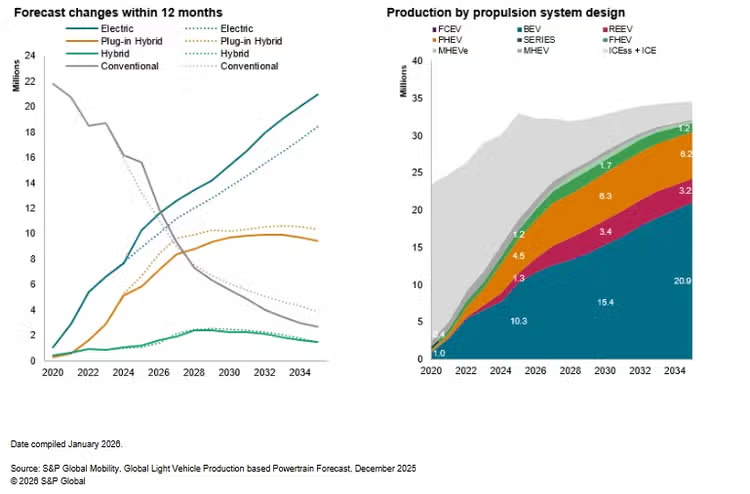
Greater China BEV forecast evolution over the last year
What’s moving the market: Forces redefining powertrain strategy to watch
Policy and compliance recalibration
The EU Automotive Package softens the original Green Deal glidepath with multi‑year averaging, small‑EV multipliers (M1e), and a revised 2035 endpoint that broadens compliance levers beyond pure BEV, while still demanding significant decarbonization. In 2025–2027, averaging keeps the EU M1 fleet on a feasible compliance trajectory, yet the ambition–capability gap returns later in the decade.
Affordability influencing consumer uptake
Price sensitivity, energy costs, and charging accessibility and range concerns are making hybrids — from MHEVs to full hybrids — increasingly attractive as a middle ground. These technologies offer quick wins for consumers and fleets alike, without demanding major behavioral shifts.
Product architecture choicesPowertrain decisions are no longer just about BEV versus ICE. They’re about architecture:
- Large investments made on dedicated BEV platforms can be recuperated by use of range extender (REEV) to provide a propulsion solution especially where there are infrastructure or physical (inertia) constraints
- High‑All Electric Range REEVs, as well as PHEVs can achieve very low CO2 emissions but are more suitable for larger vehicles due to packaging constraints
- Full hybrids offer improved fuel economy with OEMs targeting improved ICE thermal efficiency
- BEVs are aligned best to regions with strong incentives and infrastructure
Supply planning: e‑Axles & GWh
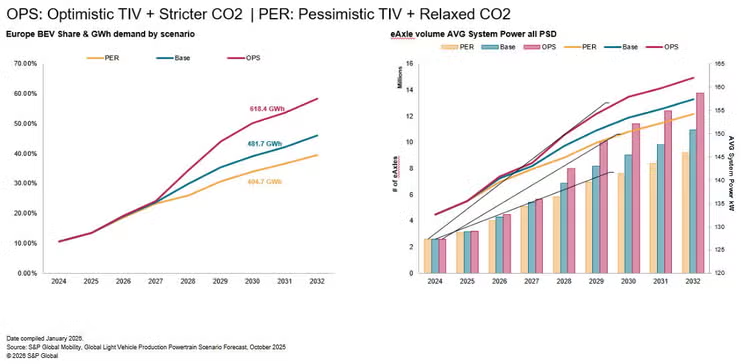
BEV growth has been uneven largely related to the introduction or removal of incentives and subsidies. This volatility gives rise to a widened outlook amongst industry stakeholders, especially in Europe, whether the CO2 targets can be met.
Our Light Vehicle Production Powertrain Scenario forecast provides two alternative futures – Optimistic (OPS) and Pessimistic (PER). The bandwidth of future BEV shares means that OEMs and suppliers must plan flexibility and the scenario modelling shows large swings in battery GWh demand or total number of eAxles produced. Scenario modelling through 2032 shows large swings in potential e‑axle volumes and battery GWh requirements, emphasizing the need for modular strategies rather than single‑path bets.
Looking Ahead: 2026–2030 as the pivotal bridge
As the industry navigates policy resets and consumer pragmatism, 2026 consolidates a multi‑track transition. OEMs are expected to double down on portfolio optionality, rolling out region‑specific BEV, PHEV/REEV, and hybrid mixes while back‑solving compliance with new EU flexibilities and evolving North American rules. The destination remains electrified, but routes and timelines differ by market.
One destination, Many routes
The global transition toward cleaner propulsion is continuing but not as a single, unified shift. Instead, 2026 reveals a world where each region is taking its own path, shaped by economics, policy, and consumer behavior.
Some routes prioritize BEVs, others lean on hybrids, and some use plug‑in technologies as stepping stones. What ties them together is the recognition that electrification is not a one‑size‑fits‑all journey. The destination may be shared — a lower‑emission future — but the ways we get there will be as varied as the markets we serve.
Planning your product and sourcing strategy for 2026-2035?
For teams looking to explore how different regulatory and market scenarios could impact powertrain outcomes, S&P Global Mobility’s Powertrain Scenario Forecast models ICE and electrified powertrains under optimistic, baseline, and conservative transition paths.
Explore the underlying Global Light Vehicle Powertrain Forecast and scenario views, plus download a free data sample today: