Rising Vehicle Inventories Boost Brand Loyalty

As vehicle inventories triple since 2022, brand loyalty soars alongside increased leasing options. Discover how market dynamics are reshaping customer relationships in automotive retail. Explore more!
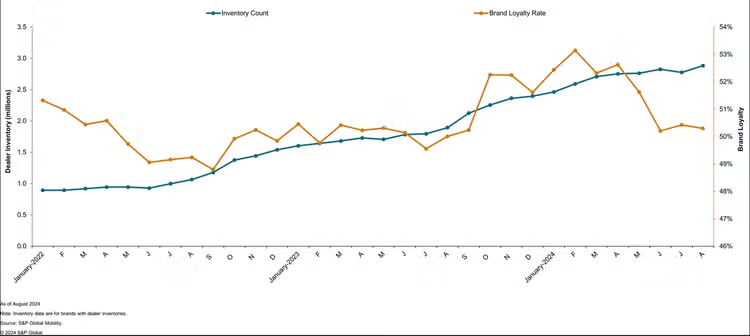
The increase in new vehicle inventories, from less than 1 million units in January 2022 to almost 3 million units in August 2024, has brought about other major changes to the industry. The greater availability of vehicles has provided consumers with more purchasing options, shifting leverage and bargaining power in favor of the consumer and creating downward pressure on prices. This has led to the resurrection of leasing, which now accounts for a quarter of all new vehicle transactions, up more than eight percentage points from 16.6% in September 2022 to 24.9% in August 2024. Particularly in the luxury space, leasing provides customers the opportunity to drive a vehicle they may otherwise be unable to afford.
Rising inventories and higher lease rates are two industry-wide trends that have understandably led to greater brand loyalty. Assuming everything else stays the same, when consumers have more choices within a brand, they are more likely to find what they want - thus enhancing brand loyalty and reducing the likelihood of switching to competitors. Lessees - who have stronger links with the dealer (including having to return the vehicle at lease end) and shorter turn rates - are also consistently more loyal to the brand than owners (again, everything else being equal).
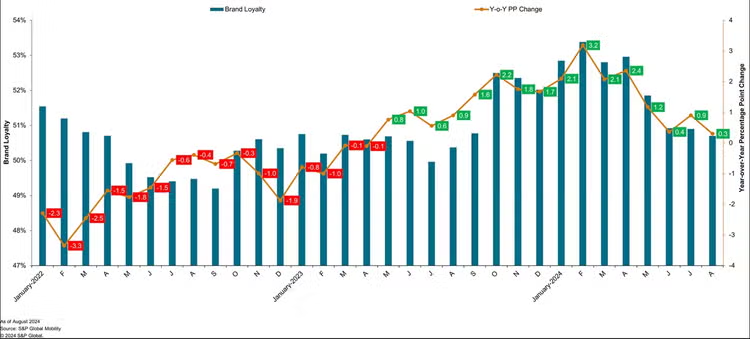
As the following chart illustrates, brand loyalty has climbed in the past sixteen consecutive months year over year after declining in the sixteen prior months. While industry-wide brand loyalty has increased, it is not yet at pre-pandemic levels of 54%-55%.
Industry Brand Loyalty with Year-Over-Year Percentage-Point Change
Dealer Inventory and Brand Loyalty
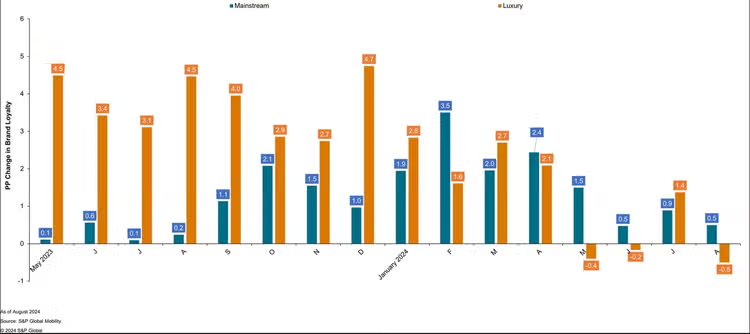
Also, as shown in the following chart, during the early part of this fifteen-month time span, the luxury brands exhibited greater year-over-year changes than the mainstream brands. This is likely in part because the luxury brands had dropped further than the mainstream brands during the inventory-shortage months and therefore had more ground to make up.
Year-Over-Year Percentage Point Change in Brand Loyalty