
Tesla brand loyalty is changing: Here’s what that says about the EV market
Explore Tesla brand loyalty trends and how electric vehicle consumer behavior is evolving as the EV market grows more competitive and diversified.
- A more competitive EV landscape
- Tesla brand loyalty vs. EV loyalty: A telling gap
- Body style is a hidden driver behind Tesla brand defections
- The cybertruck exception
- Price sensitivity is not driving Tesla defections downmarket
- Defections reflect a growing market, not a declining brand
- Conclusion: The EV buyer is growing up
The EV market is entering a new phase, defined by changing consumer choices, rising competition, and shifting expectations. Tesla, long the dominant force in the battery electric vehicle (BEV) category, still leads in many areas, but Tesla brand loyalty data shows the dynamics are evolving.
S&P Global Mobility’s latest analysis offers a more nuanced view of Tesla’s position that provides insight into the broader BEV market.
A more competitive EV landscape
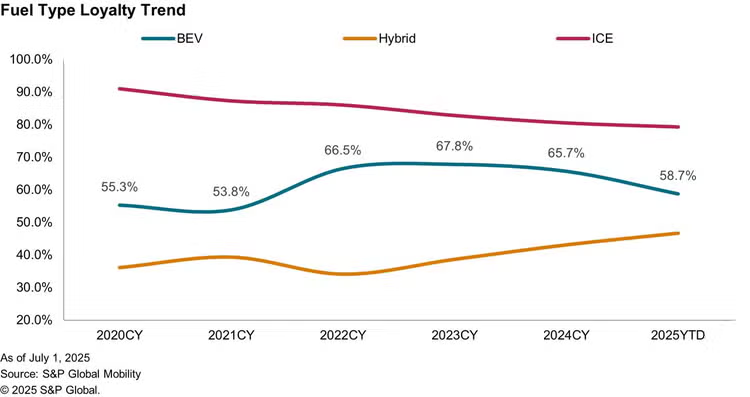
BEV loyalty overall has declined in 2025. As of year-to-date, only 58.7% of BEV households remained loyal to the fuel type when they returned to market, down from nearly 68% two years ago. Internal combustion engine (ICE) vehicles still lead in loyalty at approximately 84%, though they too are slowly eroding. Hybrid loyalty is improving but remains behind both ICE and BEVs.
Tesla brand loyalty vs. EV loyalty: A telling gap
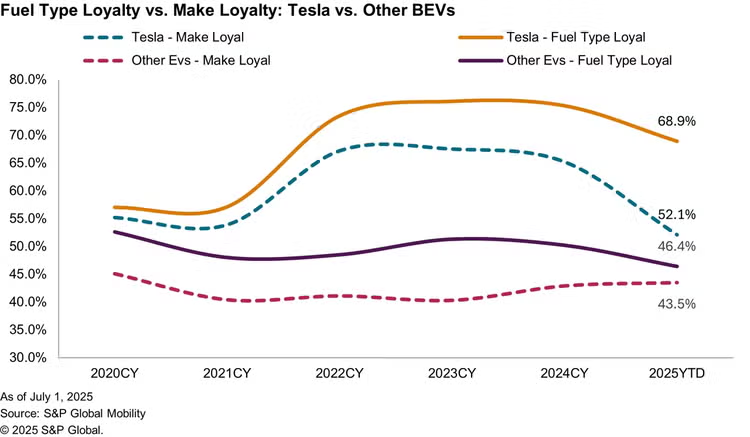
One of the clearest signals of change lies in the gap between Tesla brand loyalty and fuel-type loyalty.
As of mid-2025:
- Tesla fuel-type loyalty: 68.9%, down from a mid-70% peak in 2023. After sharp gains in 2021–2022, loyalty has eased as more Tesla owners consider EV alternatives.
- Tesla brand loyalty: 52.1%, down from ~67% in 2022–2023. The steeper drop vs. fuel-type loyalty shows owners are switching brands for better features, pricing, or service, but most are staying with EVs.
- Other EV brands’ fuel-type loyalty: 46.4%, up from ~45% in 2020. Gains suggest EV adopters outside Tesla are increasingly committed to staying electric.
- Other EV brand loyalty: 43.5%, up from ~40% in 2021, reflecting stronger brand ties as more competitive models reach the market.
Body style is a hidden driver behind Tesla brand defections
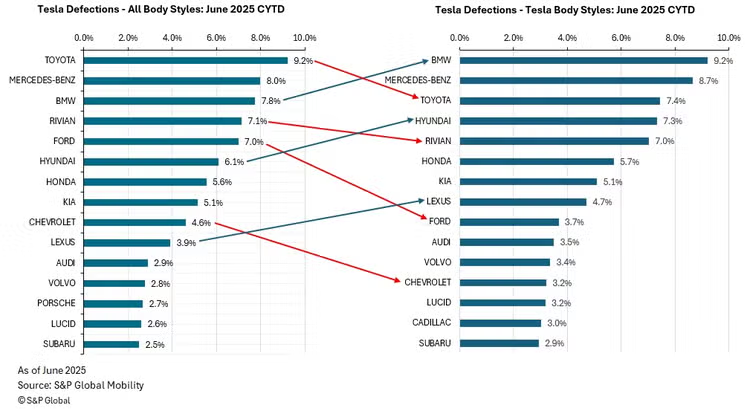
Tesla brand loyalty has weakened, but the shift is less about brand fatigue and more about consumers finding vehicles that better match their evolving needs, especially when it comes to body style and use case.
When defections are measured across all vehicle types, Toyota and Mercedes-Benz appear to benefit the most. But when filtered for only Tesla’s existing body styles — sedans, hatchbacks, and SUVs — then BMW, Mercedez-Benz, and Toyota rise to the top.
The cybertruck exception
Tesla introduced the Cybertruck to address its absence in the full-size pickup category. Early results suggest limited impact.
Despite strong awareness, Cybertruck is not converting traditional truck buyers at scale. Loyalty remains concentrated around Ford, Chevrolet, and Ram. This may point to unmet utility and design expectations or stronger brand equity among legacy truck makers.
Price sensitivity is not driving Tesla defections downmarket
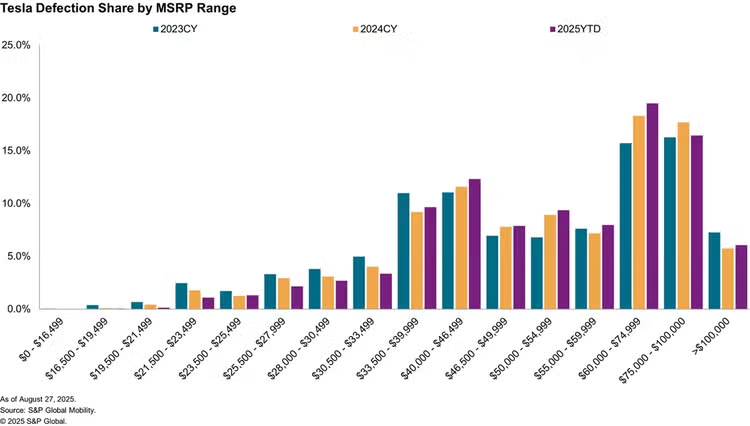
Defections are not being driven by a shift to lower-priced vehicles. Instead, Tesla households are moving to vehicles with comparable or higher MSRPs.
In 2023, the largest share of defections was in the $75,000–$100,000 range. In 2024–2025, defections concentrated in the $60,000–$74,999 band, underscoring a continued tilt toward premium tiers.
- $60,000–$74,999: up to 19.6% in 2025
- $75,000–$100,000: steady at 16.5%
- Over $100,000: holding at 6.0%
At the same time, defections to vehicles under $30,000 have fallen below 5%.
The trend underscores that Tesla defections are not cost-driven. Households are choosing alternative vehicles in comparable or higher price bands—often for differences in format, capability, or brand—rather than trading down for affordability.
Defections reflect a growing market, not a declining brand
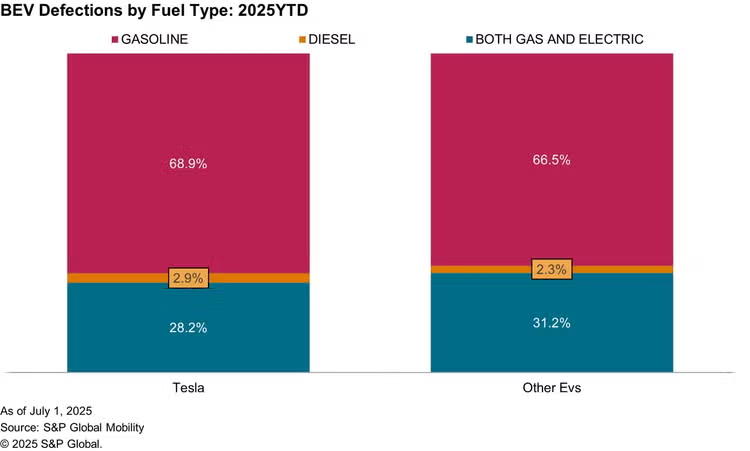
Tesla defections are increasing, but the pattern reflects market expansion rather than brand decline. Of households leaving Tesla for another fuel type, 68.9% switch to gasoline, 28.2% to hybrid, and 2.9% to diesel. These figures closely mirror defectors from other EV brands, underscoring that the trend is not Tesla-specific.
This alignment suggests that defections are shaped by household needs and vehicle availability more than by fuel preference or brand rejection. Many households are rebalancing their vehicle mix, adding formats that are not yet widely offered as EVs. Tesla shows slightly higher defections to gasoline, likely reflecting its limited body-style lineup rather than a fundamental loss of brand strength.
Conclusion: The EV buyer is growing up
Tesla brand loyalty is still strong, but it's no longer the default. In a more competitive, more body style-rich EV market, even category leaders are being held to a higher standard.
EV consumers are no longer just early adopters; they’re informed, price-sensitive, body-style-specific buyers with a growing range of choices. And that means loyalty, whether to Tesla or to BEVs more broadly, will have to be earned in new ways.
As a result, the future of the EV market is being shaped by empowered consumers making smarter, more varied choices.
Stay Ahead of US Loyalty Trends
As EV buyers grow more discerning, brand loyalty will depend on precision in matching the right product, body style, and price point to evolving customer needs.
S&P Global Mobility’s Automotive Customer Loyalty and Conquest analytics delivers more than raw numbers. It reveals the story behind owner loyalty, defections, and market opportunities.
Track purchase patterns over the past decade, uncover the drivers of brand switching, and segment customers with precision. With advanced analytics, segmentation and user-friendly dashboards, you can strengthen retention strategies and outpace competitors.
Access the Loyalty Data Sample to make informed decisions for long-term growth.