
Tesla rebuilds its lead in the US electric vehicle market
Tesla is outperforming EV rivals on registrations, loyalty and conquest rates. See how strong Model Y sales are helping extend its lead.
The end of the US tax credit for electric vehicles (EVs) last fall, along with the effective elimination of emissions requirements, substantially slowed EV deliveries. Tesla, however, has bucked that trend.
Rather than faltering alongside its rivals, Mobility Global automotive insights show that the automaker has strengthened its competitive position within the electric vehicle market, outperforming other EV brands on registrations, loyalty and conquest rates since the policy changes took effect.
Tesla pulls ahead in the US after EV incentives end, lifting EV market share
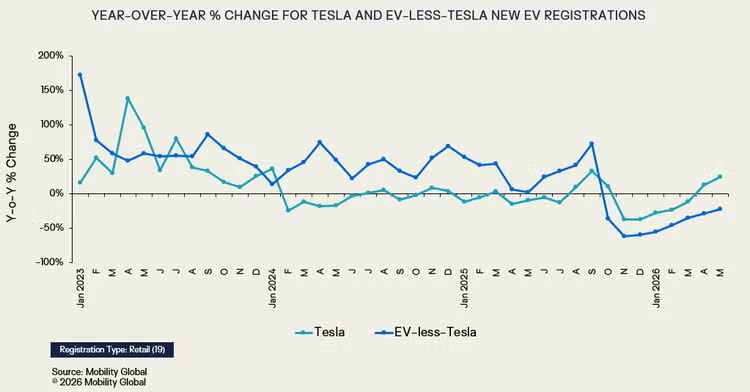
Mobility Global registration trends data provides the clearest evidence of Tesla’s momentum, including how many vehicles were registered in each state. From August 2023 through September 2025, Tesla’s year-over-year percentage change in new retail registrations trailed that of its EV competitors (in aggregate) in all but one month. (See chart below.)
That pattern reversed when the EV market slowed last October, and Tesla’s EV sales held up better than most. Since then, Tesla’s year-over-year change has exceeded that of its competitors every month, and the company enjoyed a year-over-year increase in deliveries in April and May—something its competitors, in aggregate, have yet to achieve since last fall.
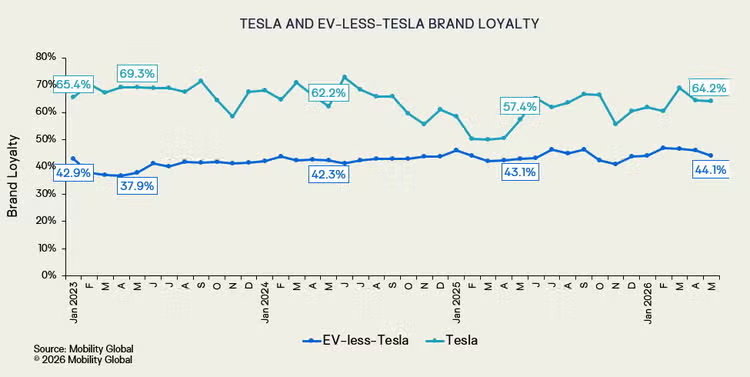
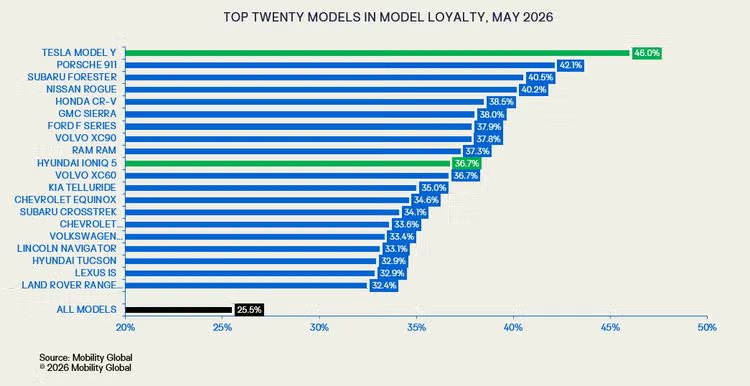
Strong Tesla Model Y sales remain central to the brand's success. The industry's leading Tesla Model Y loyalty rate helps explain why the vehicle continues to outperform many electric vehicle competitors even as broader electric vehicle market trends soften.
This level of Tesla brand loyalty has become a meaningful differentiator in today's electric vehicle market. As more electric vehicle competitors fight for a smaller pool of buyers, the brand continues to retain EV households at a higher rate than the rest of the segment.
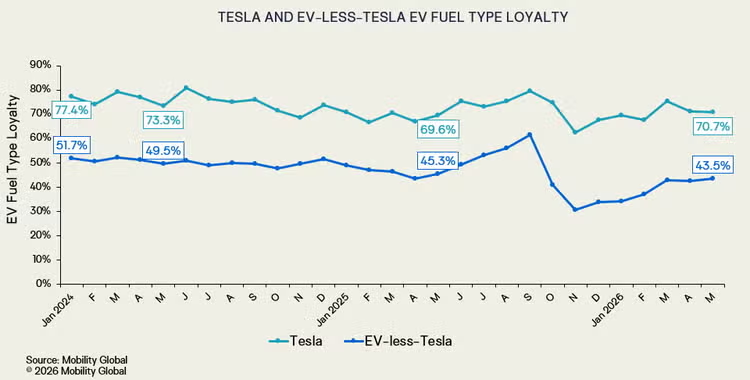
Although Tesla owners’ loyalty to EVs dipped slightly after the end of the tax credit, the decline was less pronounced than among non-Tesla EV owners and has since rebounded to exceed its May 2025 level. The gap between Tesla owners’ EV loyalty and non-Tesla EV owners’ loyalty is now an impressive 27.2 PP, up from 24.3 PP a year ago. (See chart below.)


Can Tesla sustain its momentum?
Tesla remains one of the strongest competitors in the US EV market, but questions remain about whether it can sustain that momentum over the long term. Given the brand’s success to date, it makes sense to take it seriously. Its long-term outlook will depend on several factors, including:
- whether the brand can survive long term with just one significant model;
- how much of Tesla’s recent success has been driven by renewed interest in the Model S and Model X following the announcement of their discontinuation;
- whether Tesla can maintain its competitive strength as Rivian expands its lineup, including with the launch of the smaller R2; and
- whether Elon Musk remains committed to Tesla’s new vehicle business as the company increases its focus on robotics.
For now, however, Tesla remains the benchmark against which other EV brands are measured, with industry-leading registrations, loyalty and conquest performance. As automotive industry forecasts and analysis continue to evolve, the company’s ability to maintain that lead will be one of the sector’s most closely watched storylines.
Understand how your brand loyalty is trending
Mobility Global's comprehensive automotive loyalty tool allows users to track vehicle purchases over the past decade and gain deep insights into owner loyalty, defection, and market opportunities. With advanced segmentation and user-friendly dashboards, empower your strategies for customer retention and competitive advantage.
Access the Loyalty Data Sample to make informed decisions for long-term growth.