
EV households are increasingly returning to gasoline vehicles
A growing number of EV households are returning to gasoline vehicles. Discover the brands winning defectors, key trends and what is driving the shift.
Electric vehicle (EV) households have historically shown strong loyalty to EVs, but a growing number are choosing gasoline vehicles when they return to market. A closer look at the data shows where that shift is occurring, how powertrain availability may be influencing those choices and which brands are gaining—and losing—EV customers as a result.
Together, these shifts signal changing consumer preferences and a potential conquest opportunity for automakers.
Tesla drives EV loyalty
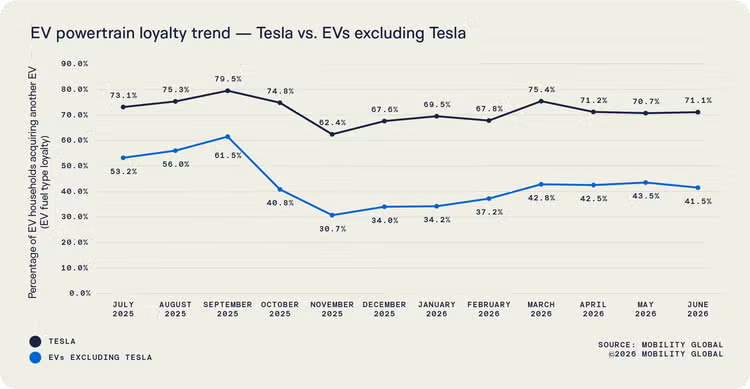
To understand the movement away from EVs, it is useful to first look at what is driving EV loyalty. EV loyalty varies by make and model. In fact, Tesla’s return-to-market households drive much of the industry’s EV loyalty: about 71% of Tesla households will acquire another EV, roughly 28 percentage points higher than the rate among non-Tesla EV households. (See Figure 1.) Previous automotive insights from Mobility Global showed that Tesla is the primary beneficiary when EV households choose another EV.
Figure 1: EV fuel-type loyalty—total industry versus EVs excluding Tesla
EV households are shifting back to gasoline
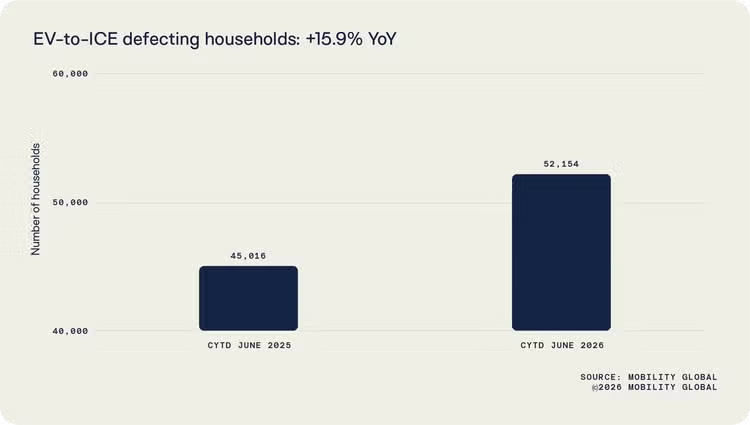
A growing number of EV households, however, are leaving the powertrain altogether and returning to gasoline vehicles. Through June 2026, 52,154 EV households in the US returned to market and acquired a gasoline vehicle, excluding hybrids and plug-in hybrids—a 15.9% year-over-year increase.
This trend suggests that EV defection is not simply a shift toward another form of electrification. A growing number of households are moving back to conventional internal combustion engine (ICE) vehicles. (See Figure 2.)
Figure 2: Volume of EV households defecting to ICE powertrain
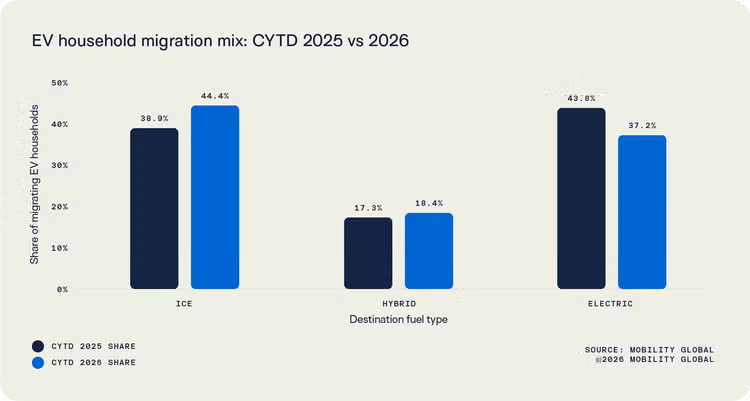
The trend is even clearer among non-Tesla EV households. The share of such households moving from EVs to gasoline vehicles rose from 38.9% through June 2025 to 44.4% through June 2026. Over the same period, the share acquiring another EV fell from 43.8% to 37.2%, while migration to a hybrid increased only modestly, from 17.3% to 18.4%. In other words, ICE vehicles—not hybrids—are capturing most of the movement away from EVs. (See Figure 3.)
Figure 3: Non-Tesla EV household migration by destination powertrain, CYTD June 2025 versus CYTD June 2026
Powertrain availability shapes EV defection
Product availability helps explain this pattern. A household may prefer a hybrid but find few choices in its desired segment, body style, price range or brand. That can force a trade-off: remain loyal to the brand and choose gasoline, or switch brands to get the preferred powertrain. In many showrooms, gasoline vehicles still offer the widest range of models, trims and price points.
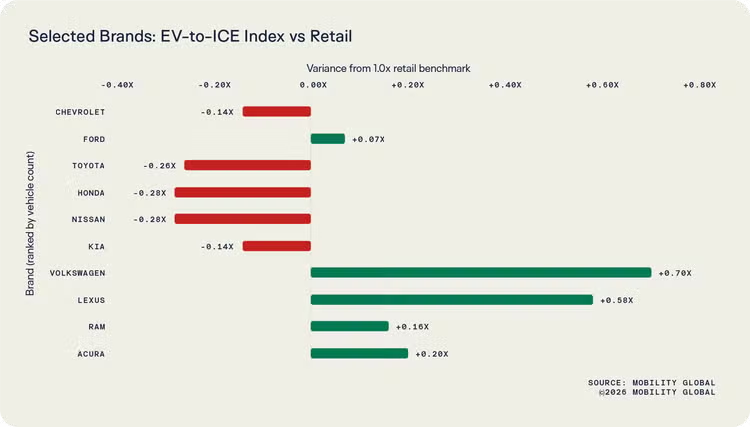
Brand conquest results reinforce this pattern. Volkswagen, RAM and Acura over-index in their share of EV-to-gasoline conquests, while Toyota, Honda, Nissan and Kia under-index. For several brands, these results broadly reflect their showroom mix. Some offer lineups weighted toward gasoline vehicles or a mix of gasoline and EVs, while others offer more hybrid alternatives, giving EV defectors a bridge between fully electric and conventional gasoline ownership. (See Figure 4.)
Figure 4: Brands over- and under-indexing in EV-to-gasoline conquests
There are some notable exceptions:
- Lexus over-indexes despite a hybrid lineup that spans sedans to full-size SUVs.
- Chevrolet under-indexes even though the Corvette E-Ray is its only hybrid offering,
- Nissan currently has no full hybrid on sale as it awaits the Rogue hybrid, although the company does offer a Rogue plug-in hybrid based on the Mitsubishi Outlander plug-in hybrid.
These outliers indicate that portfolio mix matters, but it is not the only factor. Brand consideration, segment strength, dealer reach, pricing and the specific EVs returning to market can all influence which vehicles these households choose next.
A broader powertrain mix can capture EV defectors
For automakers, these automotive consumer trends represent a meaningful conquest opportunity. Capturing them requires more than a strong EV lineup. Brands also need gasoline and hybrid options in the segments and at the price points these consumers are looking for. In the near term, brands that can offer the right gasoline or hybrid alternative may be best positioned to retain or win over customers moving away from EVs.
Understand how your brand loyalty is trending
Mobility Global's comprehensive automotive loyalty tool allows users to track vehicle purchases over the past decade and gain deep insights into owner loyalty, defection, and market opportunities. With advanced segmentation and user-friendly dashboards, empower your strategies for customer retention and competitive advantage.
Access the Loyalty Data Sample to make informed decisions for long-term growth.