
India's vehicle scrappage policy: Key insights for 2025

Explore how India's vehicle scrappage policy can drive sustainability through data-driven strategies, emissions reduction, and fleet modernization.
New Delhi air quality is among the worst of all global capitals. As the country struggles with pollution, India’s vehicle scrappage policy has come under renewed attention.
Launched in 2021 as the Voluntary Vehicle-Fleet Modernization Program (V-VMP), the government policy aims to phase out unfit, polluting vehicles and promote cleaner, safer alternatives, transforming the automotive industry in India.
Although implementation has been uneven—as seen when the Delhi government paused a proposed fuel ban and impounding for end-of-life vehicles—the policy remains central to India’s efforts to reduce emissions, improve road safety and modernize its fleet.
For local mobility stakeholders, understanding how the scrappage framework operates is key to anticipating both challenges and opportunities ahead.
What is the India vehicle scrappage policy and how does it work?
The V-VMP is India’s national vehicle scrappage policy, designed to phase out unfit and polluting vehicles to reduce air pollution in Indian cities, improve road safety and create an organized system for vehicle recycling.
Under the policy, personal vehicles more than 15 years old and commercial vehicles more than 10 years old must undergo regular fitness tests to remain on the road.Currently, one old truck or bus with BS-4 engine has emissions equal to 14 new trucks with BS-6 engine; similarly, one old car’s emissions with BS-4 are equal to 11 new cars with BS-6.
The replacement of end-of-life vehicles is projected to lead to a 15–20% reduction in overall emissions.
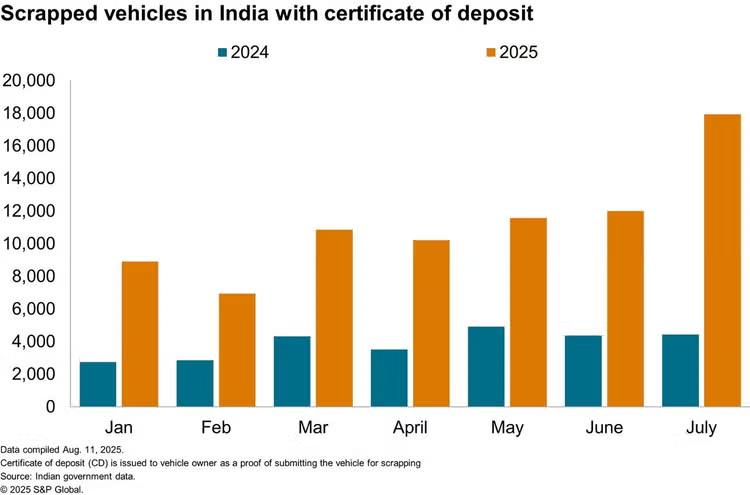
Vehicles that fail their fitness tests can be scrapped at a Registered Vehicle Scrapping Facility (RVSF), where owners receive a certificate of deposit. This certificate can be used to claim incentives, such as OEM discounts on new purchases.
The policy offers clear benefits from lower emissions, safer roads and a boost to the auto and recycling sectors. It would also help formalise the scrappage industry. But challenges remain. Limited incentives, inadequate infrastructure and the financial burden on owners continue to slow adoption.
The government is now considering fitness- and pollution level-based exemptions for New Delhi and surrounding regions, as opposed to blanket scrappage based on vehicle age.
Tracking India’s scrappage progress
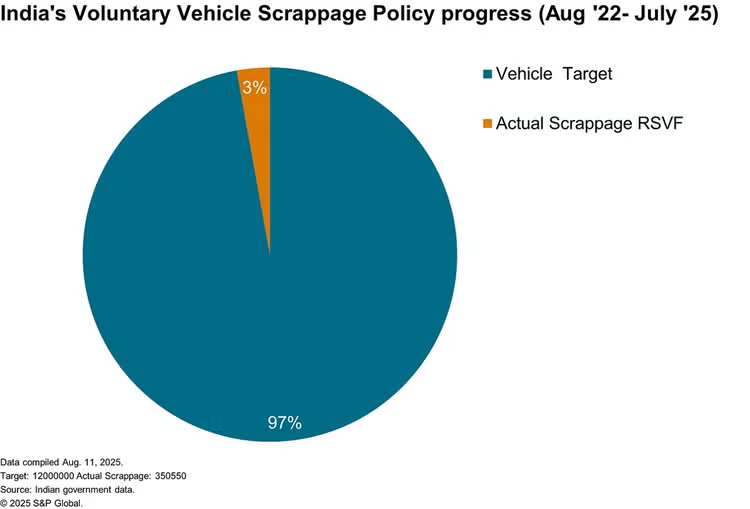
As of July 31, 2025, around 65,173 private, 46,028 commercial, 12,001 government, and 59,203 defense vehicles have been scrapped. While the framework is clear, actual progress has been limited. The government aims to scrap more than 500,000 vehicles annually by 2026, but as of 2025, progress is lagging behind targets.
Vehicle age and fleet trends in India
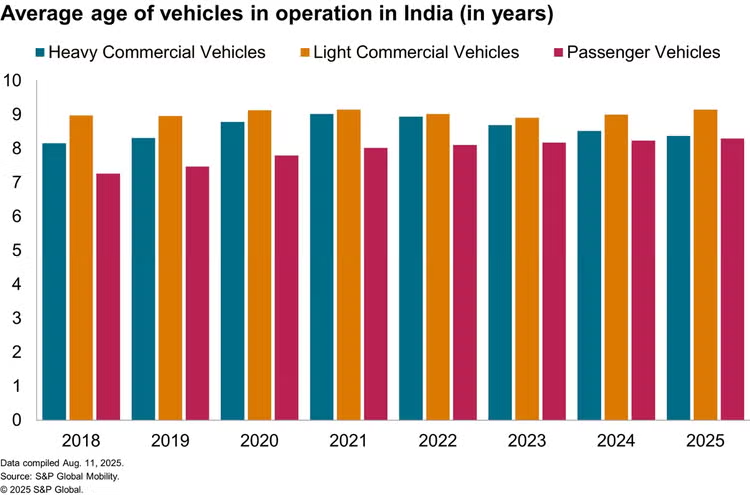
In addition to analyzing total scrappage numbers, the average age of vehicles on Indian roads is a critical factor driving the need for modernization. S&P Global Mobility’s Vehicles in Operation data shows trends in average vehicle age across vehicle categories from 2018 to 2025:
Customer incentives under India's vehicle scrappage policy
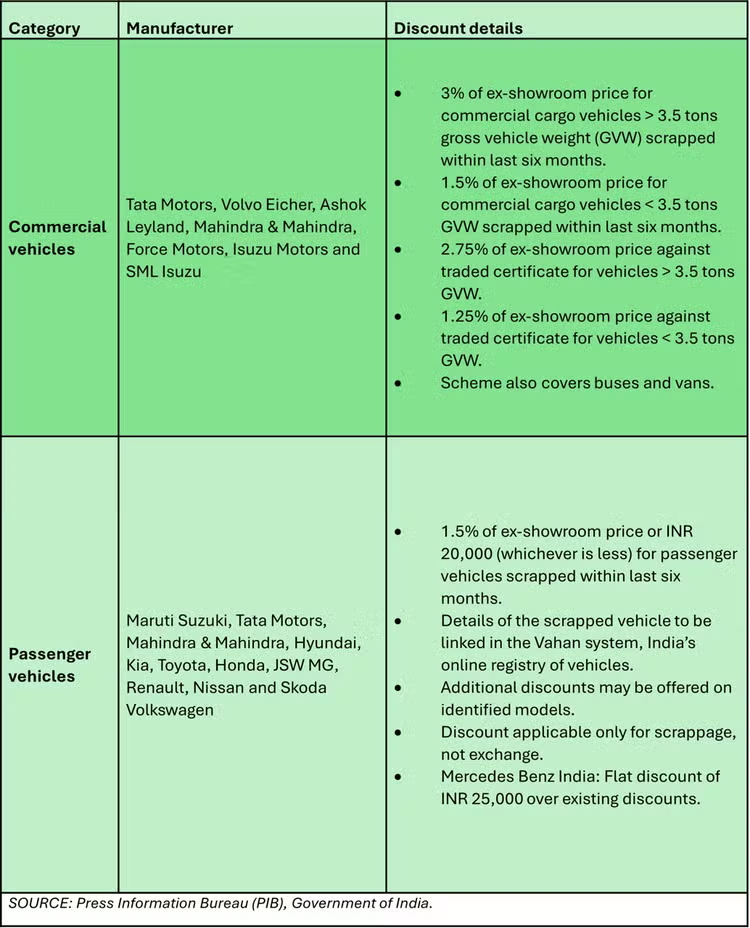
As vehicles age, incentives are crucial to increase scrappage rates to meet government targets. The V-VMP offers significant discounts to customers to ensure Indian roads are safer and cleaner and vehicles are more efficient. Commercial and passenger vehicle manufacturers have also shown a willingness to offer discounts for a limited period of two years and one year respectively. (See table below for details.)
Charting a path forward
India’s vehicle scrappage policy is still in its early stages, but it provides a foundation to modernize the fleet, reduce emissions and improve road safety. With supportive policies, shifting automotive industry trends and targeted incentives, India has the means to accelerate vehicle scrappage. Data from our Vehicle in Operation analysis pinpoints where replacement is most needed and how stakeholders can plan effectively.
As the policy is implemented, aligning scrappage efforts with data-driven insights will be critical to achieving automotive sustainability.
Join us in shaping a greener future for India's transportation sector. Learn more and speak to us about our Vehicles in Operation data and solutions.