
US new vehicle inventory: Pricing pressure persists as EV supply tightens
Affordability remains under pressure as new vehicle prices climb and EV supply contracts. See how inventory trends are reshaping the U.S. auto market.
- Affordability remains the car market’s biggest challenge
- Days’ supply rises, but aging remains contained
- EV inventory slides from last year’s peak
- Toyota takes the lead in EV inventory
- Hybrid inventory remains concentrated among a few brands
- Used car inventory offers an affordable alternative
- What June 2026 new vehicle inventory means for the year ahead
Affordability remains the car market’s biggest challenge
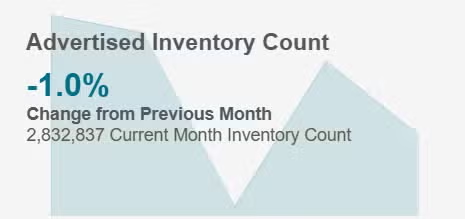
In June, average list prices for new cars rose again the fourth straight month, reinforcing affordability pressure across the automotive market. Although advertised new vehicle inventory has been stable through the first half of 2026, higher list prices keep shoppers in a difficult position as they weigh new car costs, financing rates, fuel expenses and available incentives.

Days’ supply rises, but aging remains contained
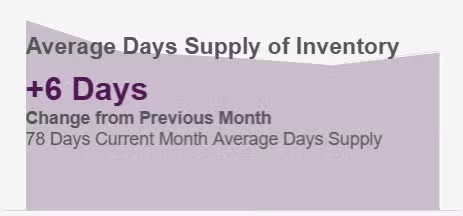
Overall days’ supply increased by six days from May to June, suggesting softer new vehicle inventory turnover. The build was most visible in fuel-intensive segments such as full-size pickups, utilities and luxury utilities (including SUVs), where affordability and fuel-cost concerns may be weighing on shoppers.
Jeep and RAM both remained above 175 days’ supply, underscoring the challenge of matching larger-vehicle supply with demand.
Still, the age of new vehicle inventory among larger vehicles, including SUVs and trucks, is not yet significantly older despite the higher days’ supply.
EV inventory slides from last year’s peak
EV new vehicle inventory continued to contract in June, totaling approximately 74,000 units, down about 60% year over year and well below the June 2025 peak. According to data from Mobility Global, EV inventory is now close to matching monthly EV registration volume, pointing to a balanced supply-and-demand environment.
Toyota takes the lead in EV inventory
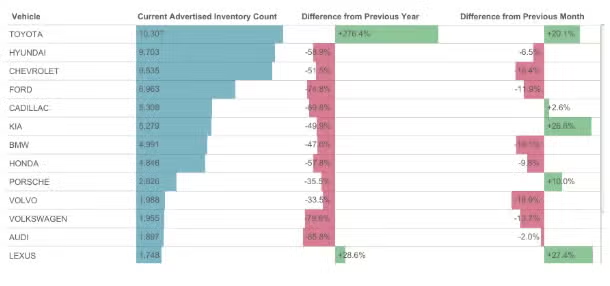
The EV brand mix also shifted. Toyota became the EV inventory leader with 10,307 advertised units, up 276% year over year and 20% from May, helped by the introduction of the bZ Woodland, which expanded the brand’s EVs for sale. Kia and Lexus also increased EV inventory by 27% month over month.
Hybrid inventory remains concentrated among a few brands
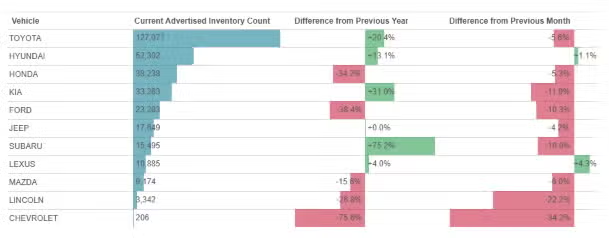
Hybrid new vehicle inventory remained anchored by Toyota, Hyundai and Honda, which continue to represent the core volume of HEV supply. However, availability is not moving evenly across brands: Honda’s hybrid inventory was down 34% year over year, signaling tighter supply for one of the market’s key hybrid players.
For OEMs, this concentration creates a clear competitive divide. Because many shoppers prefer hybrids as a low-friction alternative to full EV ownership, brands with consistent HEV availability are better positioned to capture that demand. OEMs without comparable hybrid supply may find those shoppers shifting toward a competitor’s hybrid lineup or settling for a standard ICE vehicle.
Used car inventory offers an affordable alternative
Used vehicle inventory adds another perspective on affordability, especially for vehicles less than five model years old. As new vehicle list prices rise, late-model used vehicles may become more relevant for price-sensitive shoppers.
Used EV inventory is also worth watching as tighter new EV supply could shift more interest toward late-model used EV options.
What June 2026 new vehicle inventory means for the year ahead
June’s new vehicle inventory picture looks stable on the surface, but the details show meaningful shifts. With list prices continuing to rise, the primary challenge is ensuring the current inventory mix aligns with consumer affordability thresholds. The uptick in days’ supply for larger ICE segments is a signal to stay disciplined on trim and configuration, ensuring that the vehicles on the ground remain in the "sweet spot" for monthly payments before slower turnover becomes a broader issue.
At the same time, the contraction in EV supply shifts the focus from clearing volume to protecting conversion with the right configurations in the right regions. Because hybrid supply remains concentrated, availability will be the deciding factor in which brands capture demand from shoppers who are not yet ready for full EV ownership.
The practical priority for OEMs is to manage for both new vehicle inventory turnover and transaction health, rather than focusing solely on total volume. This means tightening build and allocation to the most financeable trims, deploying incentives surgically where turnover is slowing and ensuring electrified supply is positioned where it can be sold quickly. In an automotive market where affordability is the primary constraint, the winners will be those who treat vehicle inventory management as a precision exercise, aligning their product mix with what consumers can actually afford to finance while supporting dealership execution for overall car sales performance.
Looking for more automotive insights? Explore our monthly new vehicle inventory analyses for March 2026 and April 2026 to see how inventory, pricing and EV trends have evolved.