
Driving success with customer loyalty in the automotive industry

Get the latest insights on customer loyalty in the automotive industry and strategies for automakers to build and maintain a loyal customer base.
- Understanding customer loyalty rates in the automotive industry
- Customer loyalty varies significantly by location
- The impact of vehicle ownership models: Lease vs. purchase
- Customers for life
- The impact of captive lenders on customer loyalty
- Loyalty to electric vehicles
- How OEMs can turn loyalty insights into action
- Conclusion
Customer loyalty drives long-term growth in a competitive automotive market. Fostering loyalty among a brand’s customers enhances its reputation and drives profitability. Mobility Global data reveals where loyalty is strongest—and how automakers can improve it.
Why do vehicle manufacturers place such a high value on loyalty? Loyal customers deliver repeat sales, referrals and lower acquisition costs. They can help stabilize revenue while serving as brand ambassadors who attract new customers.
Retaining customers can also be significantly less expensive than acquiring new ones. According to a 2014 Harvard Business Review study, acquiring new customers can cost five to 25 times more than retaining existing ones. Investing in customer loyalty initiatives can therefore help manufacturers reduce marketing costs while strengthening their customer base.
Understanding customer loyalty rates in the automotive industry
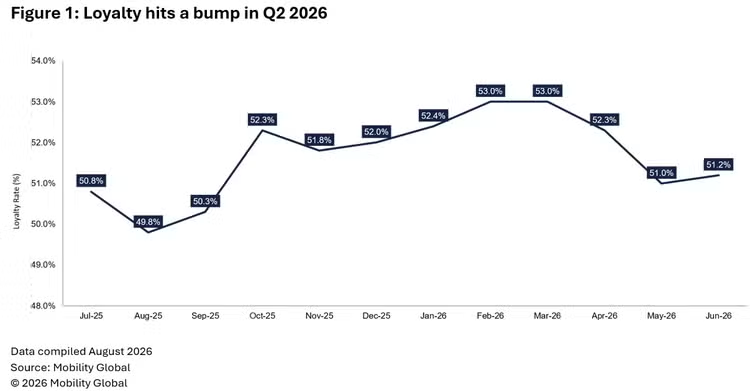
Mobility Global loyalty data shows the overall US brand loyalty rate was 51.6% from July 2025 to June 2026. Loyalty rates trended up for most of 2025 and peaked in Q1 2026 before falling by as much as 2 percentage points (pp) in Q2. (See Figure 1.)
Breaking down the overall rate reveals sharp loyalty differences between mainstream and luxury brands. Mainstream brands have a loyalty rate of 52.3%, compared with 48.8% for luxury brands.
Luxury consumers tend to have greater financial flexibility and more choices, which may contribute to lower loyalty. They may also have higher expectations for quality, performance and customer experience. When brands miss these expectations, customers may switch.
Individual brands can perform above segment averages, with the top-performing mainstream and luxury brands posting notably higher loyalty rates. The top-performing mainstream brands from July 2025 to June 2026 include:
- Toyota: 59.0%
- Ford 58.3%
- Chevrolet: 56.3%
The top-performing luxury brands, excluding exotic brands, during the same period include:
- Tesla: 63.7%
- BMW: 53.6%
- Mercedes-Benz: 52.9%
These results show that strong brand loyalty can cut across market segments, making customer retention an important consideration for manufacturers across the industry.
Customer loyalty varies significantly by location
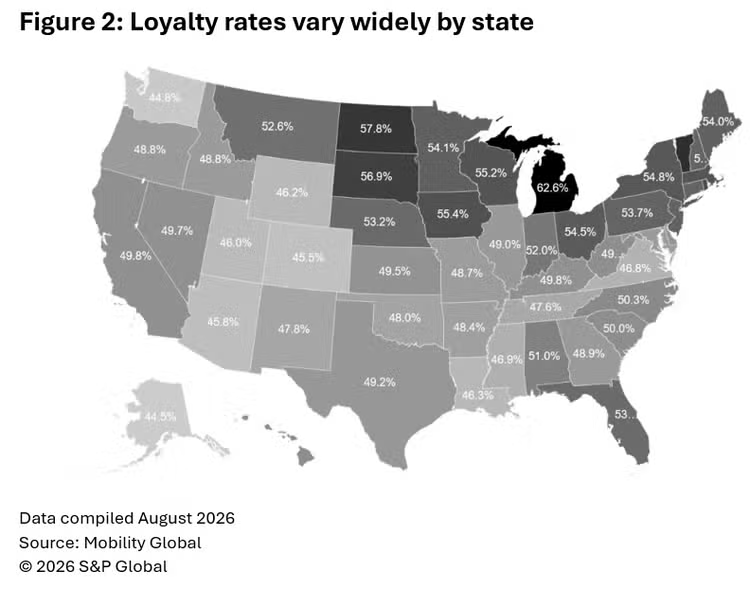
Customer loyalty varies widely by state, reflecting differences in brand strength, ownership patterns, market composition, vehicle needs and product availability. (See Figure 2.) Understanding these local dynamics can provide automakers with insights beyond national averages.
Automakers can defend high-loyalty states with retention messaging, lease pull-ahead programs and portfolio walk strategies. In lower-loyalty states, targeted incentives, local marketing and dealer support can reduce defections. Aligning strategies with local loyalty patterns enables more targeted investments.
The impact of vehicle ownership models: Lease vs. purchase
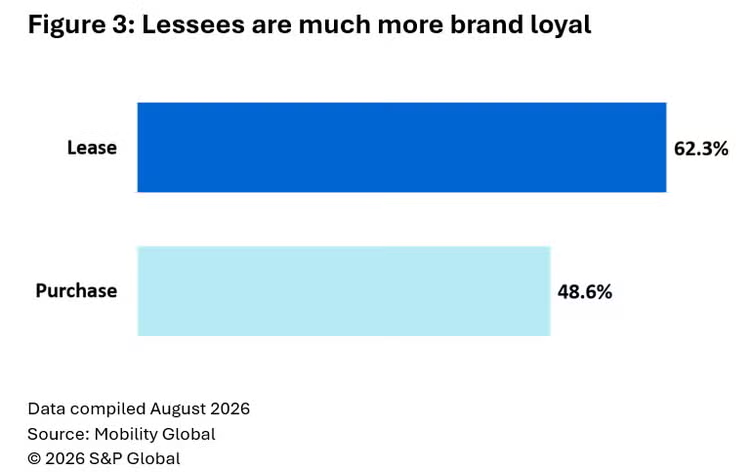
Financing type strongly affects loyalty. Mobility Global’s AutoCreditInsight™, in partnership with TransUnion, shows that households that lease vehicles have a loyalty rate of 62.3%, compared with 48.5% for those that finance purchases and 49.0% for cash purchasers—a combined rate of 48.6%. (See Figure 3.) This gap gives automakers a clear retention opportunity.
The predictable buying cycle for lessees allows brands to time marketing messages and offers to customers as their leases mature. Timely, relevant offers help keep lessees with the brand.
Customers for life
Retention builds customer lifetime value. For example, a young professional may start with an entry-level vehicle, but as their career progresses, may seek to upgrade to a luxury model.
Brands can also grow with buyers as they move through various life stages—from single buyers to couples, families and empty nesters, each with different vehicle needs. By offering a diverse range of vehicles, manufacturers can create pathways for customers to remain with their brand, resulting in increased lifetime value and loyalty.
The impact of captive lenders on customer loyalty
Data from 2026 highlights significant differences in customer loyalty rates by lender type. Captive lenders, which are typically affiliated with manufacturers, have a loyalty rate of 55.9%, compared with traditional banks, independent banks and credit unions, which show lower loyalty rates of 48.7%, 51.9% and 47.2%, respectively. (See Figure 4.)
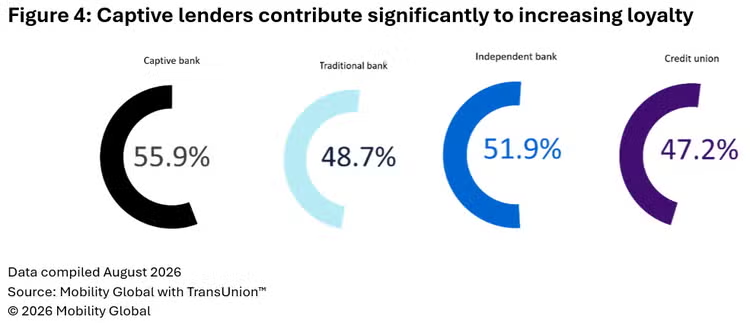
This phenomenon, referred to as "captive lift," underscores the unique advantages that captive lenders offer. By aligning their services closely with customer needs and experiences—often tied to the products they sell—captive lenders can foster a stronger emotional connection between their clients and the vehicle brand. This connection helps to enhance customer satisfaction and encourages repeat business and referrals.
As the lending market evolves, understanding these factors can help all lenders bolster their customer retention strategies.
Loyalty to electric vehicles
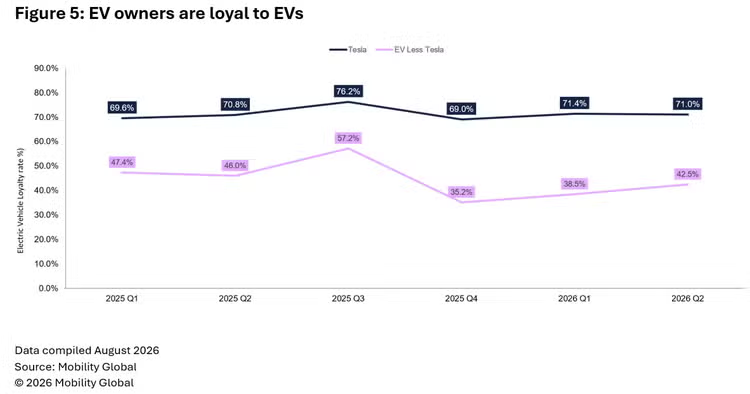
While momentum for electric vehicles (EVs) has slowed in the US, Mobility Global loyalty data suggests EV owners are likely to remain EV owners. (See Figure 5.) Tesla households show a particularly high 71% EV loyalty rate, meaning they are likely to acquire another EV. Non-Tesla EV households have a lower 42.5% EV loyalty rate, but that rate has trended upward after dipping around the sunsetting of federal EV tax credits in Q3 2025. Brands can leverage this loyalty to EVs to retain customers as they introduce next-generation electric vehicles.
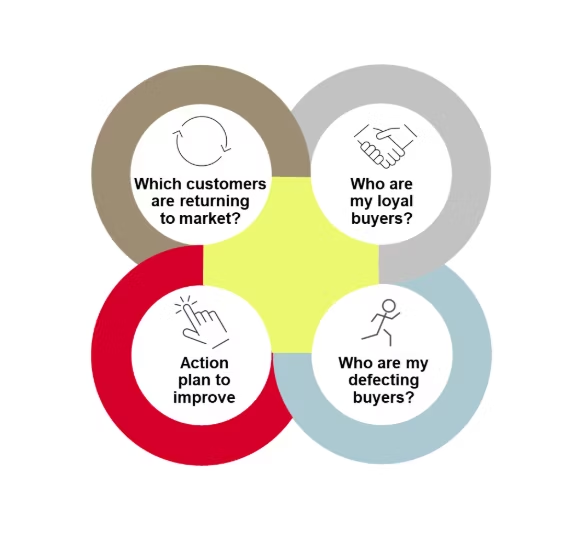
How OEMs can turn loyalty insights into action
Turning loyalty into long-term customer growth
Customer loyalty is a growth driver—not just a metric. Understanding how loyalty varies by brand, market, financing type and vehicle type can help manufacturers identify retention opportunities and make more informed decisions. Equipped with this information, manufacturers can cultivate a loyal customer base that drives long-term growth and profitability.
Dive Deeper on Loyalty Data
To take your understanding of automotive loyalty to the next level, use the suite of tools available through Mobility Global, such as Loyalty Analytics and AutoCreditInsight. Our robust analytics platforms provide deep insights into consumer behavior, enabling you to make informed decisions that enhance customer retention and loyalty.
Download a sample of our loyalty data today to see a preview of what we offer.