
Surprising Trends in the US Electric Vehicle Market

US electric vehicle market thrives beyond Tesla, revealing unexpected growth patterns and shifting loyalties.
Excluding Tesla, the US retail electric vehicle market is performing higher than reported.
Starting in early- to mid-2023, the growth in US retail market share for electric vehicles has slowed. The April 2024 retail share of 8.7% was up just 0.4 percentage points from a year ago, while hybrid share rose almost 2 points over the same time period.
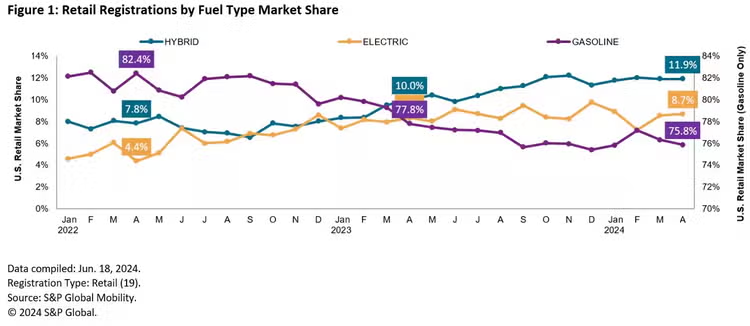
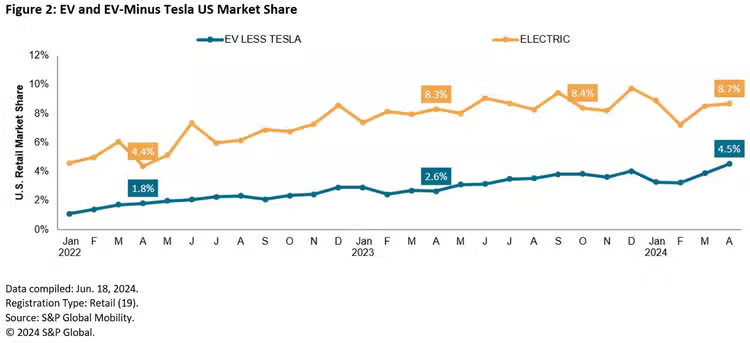
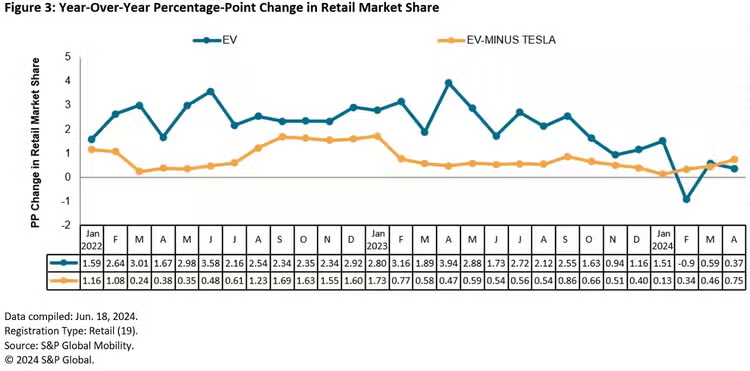
April results at the brand level further illustrate the negative market impact of Tesla. The overall EV market climbed 12% year-over-year in April, but if Tesla is removed, EV deliveries jumped an impressive 75%. Eighteen brands enjoyed year-over-year increases in April, while only nine experienced declines. Four additional brands had EV registrations this past April but none a year ago.
Among the 18 brands with year-over-year gains, EV deliveries doubled (at least) for eight of them in April, and registration volumes for three of them surpassed 6,000 units, including Ford (6,409), Hyundai (6,049) and Toyota (4,509).
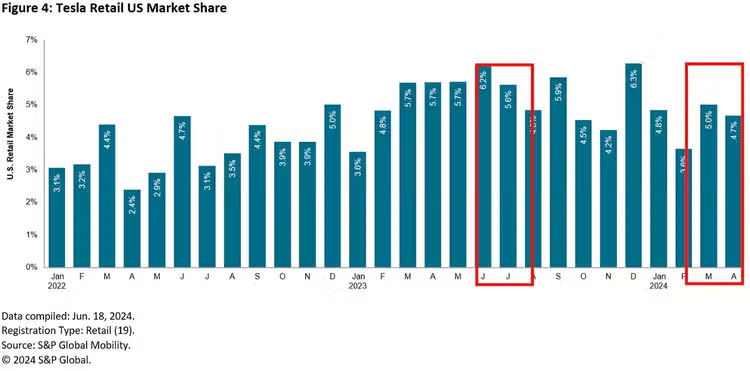
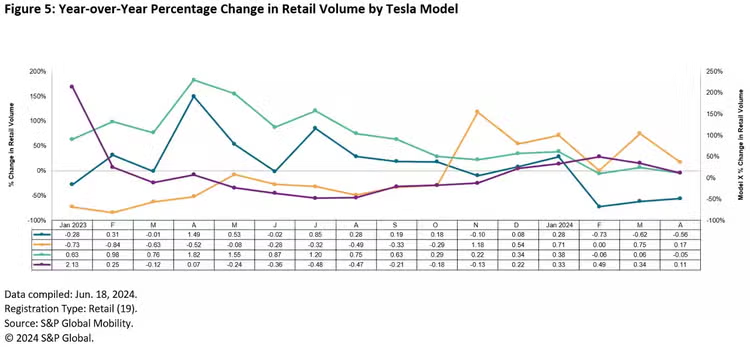
Predictably, Tesla's share of the US market declined in each of the three most recent months (versus a year ago), never exceeding 5% during this time period while exceeding that threshold in two of the three corresponding months a year ago.
Tesla Brand Loyalty Remains Steady
Given Tesla's poor showing in each of the three most recent months, a decline in brand loyalty would make sense. But, as shown in Figure 6, Tesla's brand loyalty has only declined marginally since February.
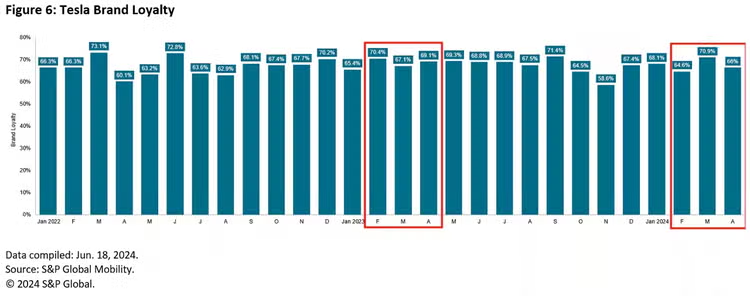
Tesla brand loyalty remained relatively steady because return-to-market (RTM) Model 3 households, unable to get another one due to model changeover, migrated to the Model Y and thereby remained brand loyal. Given that the Y is a utility and the 3 a sedan, that migration pattern makes sense. This past February, more than 50% of RTM Model 3 households opted for a Model Y, the highest result for this pattern migration dating back to at least the beginning of 2022.
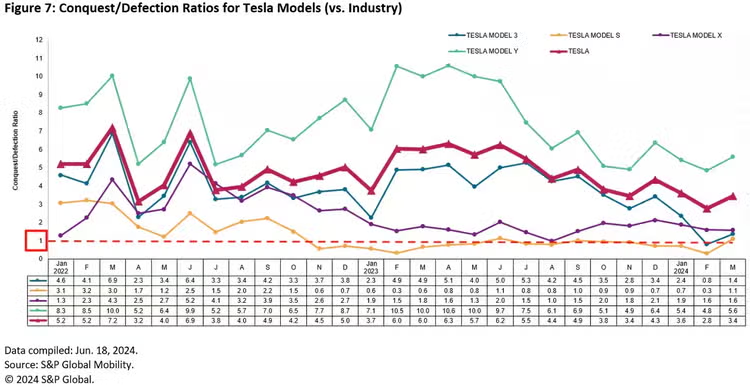
Model 3's reduced availability in the past several months not only caused owners to migrate to the Model Y, it also reduced the Model 3's ability to conquest competitive brand owners. Model 3's conquest/defection ratio with the rest of the industry plummeted at the start of this year when measured versus a year ago. This year's ratios of 2.4, .8 and 1.4 in January, February, and March, respectively, all are down significantly from 2.3, 4.9 and 4.9 a year ago.
Three takeaways from this review are:
- Loyalty, conquest, defection, and general migration patterns frequently diverge from predictable ones during a build-out of one model and launch of another.
- Tesla's continued influence on the entire US EV market is illustrated by the fact that one Tesla model's atypical market performance can influence not just Tesla but the entire US electric vehicle market.
- By monitoring model and brand migration patterns on a weekly basis, a brand can quickly see changes in the marketplace and adjust marketing programs to mitigate unwanted results.
Try a demo of our loyalty analytics tool and access EV buyer audiences for your marketing campaigns.