January 2026 US new-vehicle inventory trends: Hybrids surge and EVs adjust
January new vehicle inventory data shows stable inventory but slower sales, with hybrid inventory continuing to rise and EVs normalizing. Understand the latest insights with this monthly snapshot.
- Hybrids continue to build, EVs continue to normalize
- Model-level movements to watch
- Supply, aging and velocity: Demand cooled in January
- Pricing: Modest declines, tigher discounts
- Conclusion
Hybrids continue to build, EVs continue to normalize
Hybrid inventory moved sharply higher, up 6.9% MoM and 14.4% year over year (YoY) to 306,461 units.
Meanwhile, EV inventory continued to contract, decreasing 2.0% MoM and 29.3% YoY to 101,851 units, extending the Q4 2025 downtrend and reinforcing the idea that the EV market has been working through excess availability via lower pricing, incentives, and mix changes.
Model-level movements to watch
At the nameplate level, a few changes stood out:
- Hyundai Ioniq 5: +86% YoY
- Chevrolet Equinox EV: +42% YoY
- Ford Mustang Mach‑E: Increased 15% MoM, a notable near-term build after prior softness.
- Lexus RZ climbed 194% YoY, one of the largest relative increases among EVs.
Supply, aging, and velocity: Demand cooled in January
Days’ supply increased from 70 to 97 (+27 days), a sizable shift that likely reflects a slower sales pace in January rather than a sudden surge of inventory. Despite the days supply jump, average age of inventory held flat at 77 days, suggesting the market did not materially worsen on “staleness,” even as turn rates slowed.
Pricing: Modest declines, tighter discounts
Pricing softened slightly in January with the average MSRP falling $294 to $50,687; average list price down $198 to $47,238; and the average discount decreasing $94 to $3,450. These modest changes reflect a shift toward lower-priced models and dealers staying more disciplined rather than enacting broad price cuts.
Overall, this looks less like aggressive clearing and more like incremental price recalibration, with discounting lessening even as days’ supply rose. With inventory aging and days’ supply rising, dealers are relying on targeted incentives and selective markdowns, especially as hybrids remain strong and EVs require sharper pricing to move.
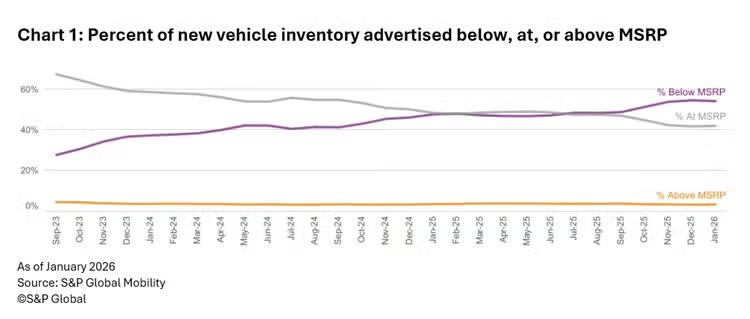
Chart 1 below shows the trend of vehicle pricing relative to MSRP. While the long-term trend is up, the last three months (Nov. - Jan.) have shown that a steady 54% of inventory is listed below MSRP.
Conclusion
January’s data shows stable inventory but slower sales, with hybrid inventory continuing to rise and EVs normalizing. Pricing is adjusting gradually, with smaller discounts and lower MSRPs, indicating a measured response to slower demand. Going forward, aligning pricing and incentives to local market conditions will be key, especially for EVs where affordability and competitive offers drive sales.
With S&P Global Mobility's vehicle inventory data, automakers can identify market opportunities and risks, optimize incentive spending, refine production strategies, and stay ahead of the competition in a rapidly changing landscape.
We provide inventory data at the national, state, DMA and dealer levels, covering more than 19,000 dealer sites. Learn more and download a data sample.