
Staying put, staying loyal: How residential tenure impacts brand loyalty
Home stability is an often-overlooked behavioral signal for automotive brand loyalty. Learn what the data says and gain key insights for optimizing your marketing strategy.
Nearly 25-30 million Americans change addresses each year, with 50% of these moves occurring between May and August.* For marketers, this is a prime opportunity to target movers for other big-ticket purchases, like new vehicles.
But what about the rest of the market—the locals that have been in the same home for 10 years or more? What’s the opportunity here and does it differ from the movers?
To explore this consumer segment, we examined how residential tenure varies across regions and markets and what those differences reveal about new vehicle buying behavior.
*Source: US Census Bureau and Mover Scorecard. Published May 2026
Residential stability is highly local
Nearly half of US households have lived in the same home for more than nine years. But national averages aren’t fundamental truths. They are directional at best. In the New York City DMA, median household tenure sits north of 11 years. In contrast, the Austin, Texas DMA sees tenure at just under 7 years.
These differences matter because the decision to stay or move often reflects deeper socio-economic attitudes towards risk, stability, long-term planning and major purchase decisions. That connection becomes particularly relevant in the automotive market.
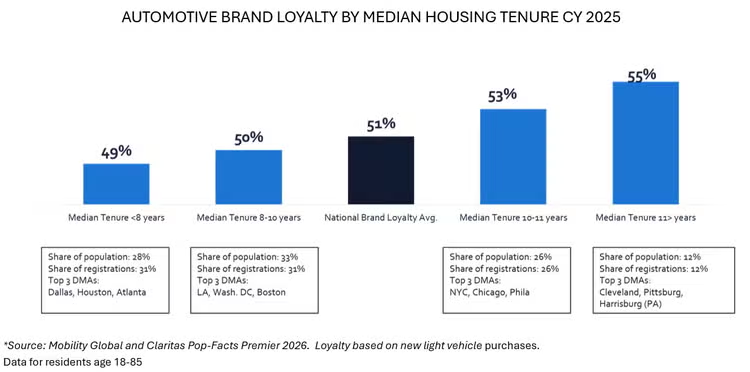
As the chart below shows, the gaps between the populations with longer or shorter median tenured residencies are noticeable with significant variances in brand loyalty.
A tenure-to-loyalty pattern emerges
While household tenure is not the sole driver of vehicle choice, it appears to be a meaningful indicator of decision-making patterns that shape in-market preferences and behavior.
Markets where households have longer tenure in their homes also exhibit higher levels of automotive brand loyalty. In contrast, markets with shorter residential tenure are generally characterized by lower brand loyalty and a greater willingness to switch brands.
This connection between residential stability and automotive loyalty goes beyond market comparisons and is demonstrated within markets across individual communities and counties. People who stay in their neighborhoods/zip codes longer are often more loyal to automotive brands.
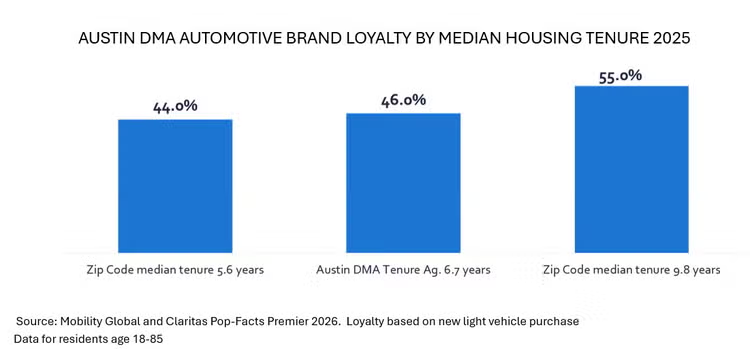
Going back to Austin, TX. The DMA average for housing tenure is 6.7 years and for brand make loyalty is 46%. In an Austin DMA zip code with housing tenure below the average (5.6 years) the brand loyalty figures drop. In a zip code with higher tenure (9.8 years), make loyalty rises.
Strategic implications for OEMs, dealers, and marketers
1. Treat home tenure as a behavioral segmentation layer, not a housing statistic
Residential tenure can be used to refine audience and messaging strategy beyond traditional demographics by identifying where consumers are more likely to:
- Default to the familiar (loyalty-dominant behavior), or
- Reconsider and switch (conquest-ready behavior).
2. Optimize incentive strategy by aligning spend to retention and conquesting tactics
- High-tenure areas: prioritize retention tactics —lease pull-ahead, service-to-sales conversion, and ownership experience messaging. The objective is to protect share efficiently rather than “buy” loyalty that already exists.
- Low-tenure areas: lean into conquest and comparison-driven offers—competitive conquest bonuses, payment-focused creative, and simplified trade-in messaging. These consumers are more open to brand re-evaluation, and incentives can be more incremental.
3. Localize creative and channel mix to mobility patterns
Stable communities often respond to messaging rooted in reliability, long-term value, and trust. Dealer relationships and service continuity are important to leverage here. More transient communities may respond better to affordability, flexibility, low-friction purchase paths and available inventory reflecting their broader preference for optionality and quicker purchase cycles.